

of America
With the New Year's Baby
As the United States approaches its 250th anniversary, we are pleased to launch a yearlong series of monthly virtual exhibitions celebrating the nation’s history through American illustration.
These exhibitions explore how artists helped define—and reflect—the evolving American story, capturing shared ideals, traditions, and moments of cultural significance.
Our January exhibition opens the series with a festive and iconic theme: the New Year’s Baby. Few artists interpreted this enduring symbol with more charm, confidence, and visual authority than J.C. Leyendecker. Best known for his celebrated covers for The Saturday Evening Post, Leyendecker transformed the New Year’s Baby into a bold, modern emblem of optimism, renewal, and forward momentum—qualities closely tied to the American spirit itself.
This curated selection brings together Leyendecker’s New Year’s Baby illustrations created for The Saturday Evening Post, showcasing his masterful design, dynamic brushwork, and unmistakable sense of style. As we turn the calendar and look ahead to a milestone anniversary for the nation, these images invite us to reflect on the artists who helped shape how America has seen itself for more than a century.
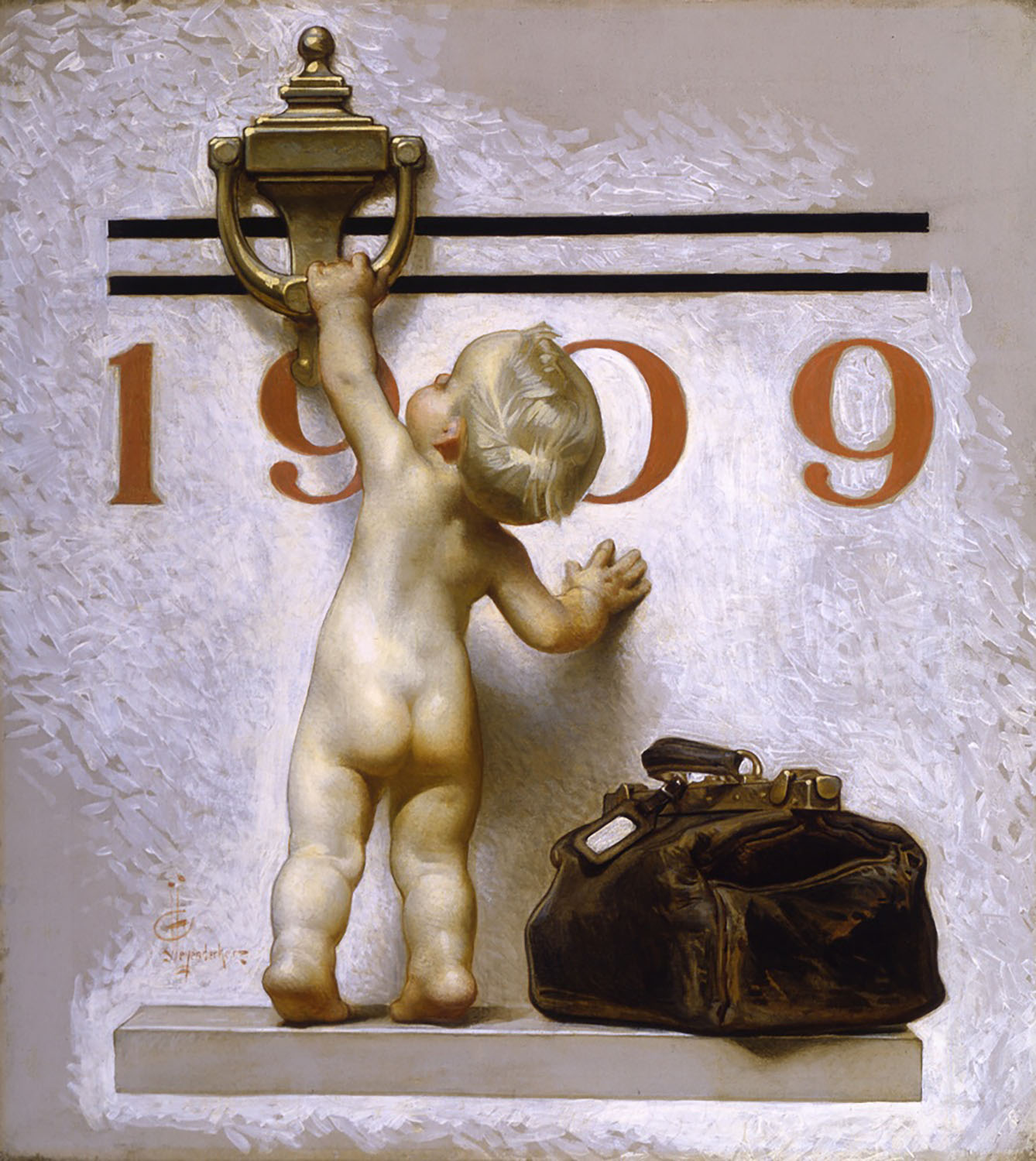
J.C. Leyendecker (1874-1951)
New Year's Baby 1909
1908, oil on canvas
28" x 26", signed lower left
Saturday Evening Post, January 2, 1909 cover
J.C. Leyendecker’s 1909 Saturday Evening Post New Year’s Baby cover presents the infant not as a passive symbol, but as an active visitor arriving with purpose. Reaching up to knock on a door, with a doctor’s bag placed beside him, the New Year’s Baby becomes a metaphor for renewal, healing, and fresh possibilities. The imagery suggests the coming year as a kind of house call—bringing remedies for past troubles and hope for improvement ahead. Through this clever visual metaphor, Leyendecker transforms a familiar holiday figure into a reassuring promise that the new year arrives ready to mend, restore, and begin again.
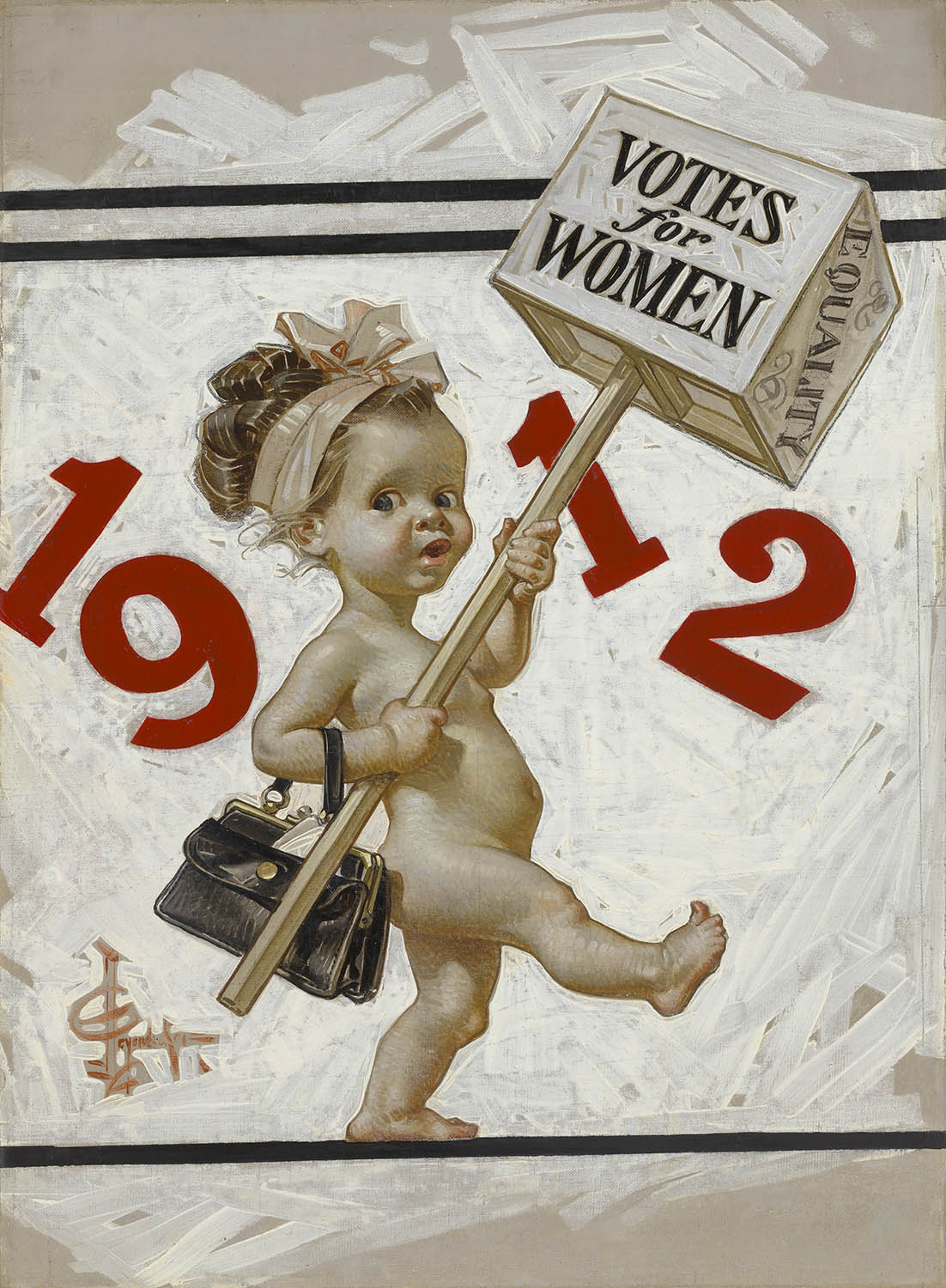
J.C. Leyendecker (1874-1951)
New Year's Baby 1912 - Votes for Women
1911, oil on canvas
26 1/8" x 19 1/8", signed lower left
Saturday Evening Post, December 30, 1911 cover
J.C. Leyendecker used his 1912 illustration to reflect the growing momentum of the women’s suffrage movement. At a time when suffragists were actively campaigning across the country—lecturing, marching, and challenging voting laws—the image signaled hope for a more equitable future. Though the 19th Amendment would not be ratified until 1920, Leyendecker’s New Year’s Baby anticipated that change, embodying the promise of progress and the belief that a new era of political rights for women was on the horizon.
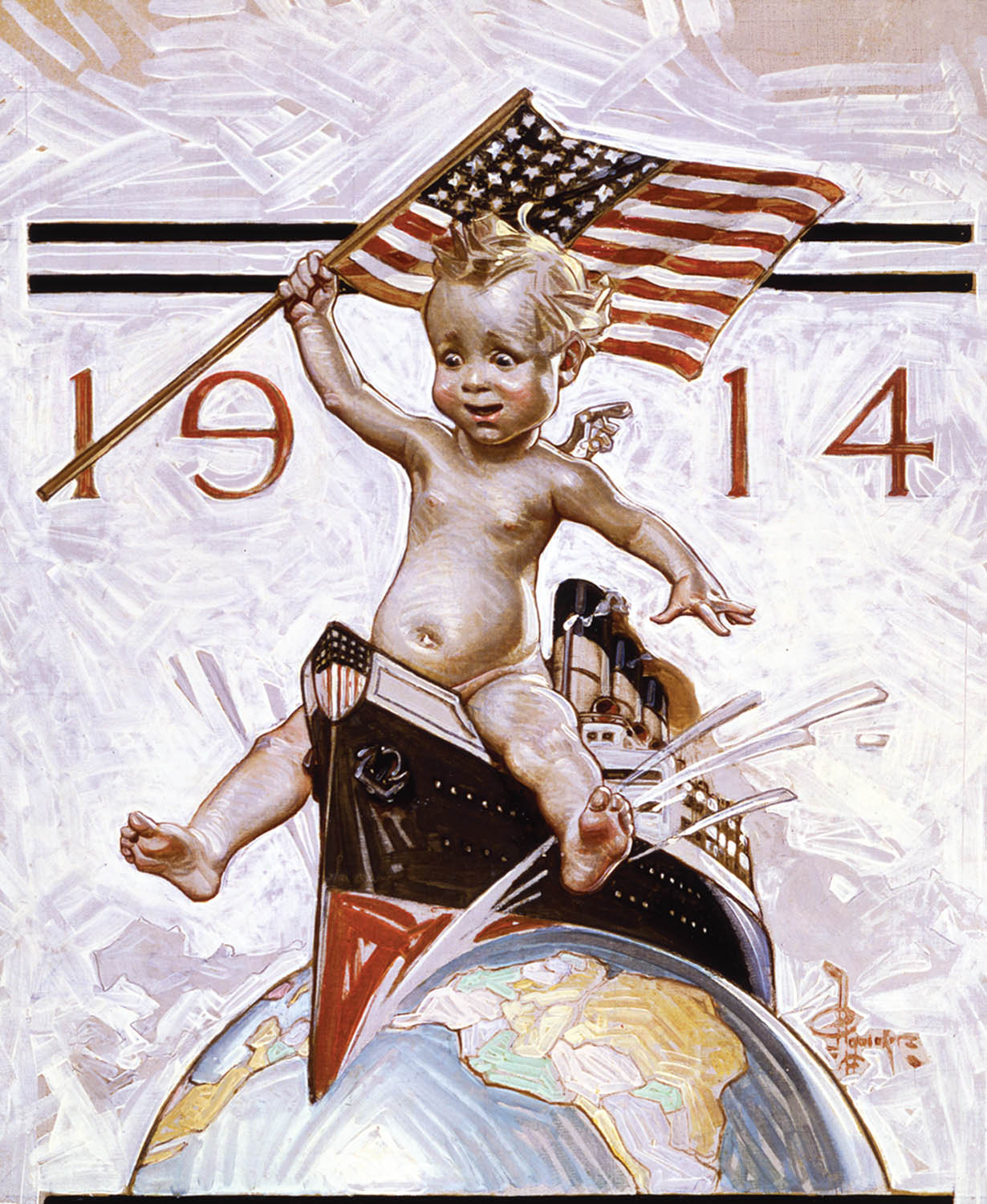
J.C. Leyendecker (1874-1951)
New Year's Baby 1914 - Panama Canal
1913, oil on canvas
20" x 14", signed lower right
Saturday Evening Post, January 3, 1914 cover
J.C. Leyendecker’s 1914 Saturday Evening Post New Year’s Baby cover captures the nation’s forward-looking optimism at a pivotal moment in American history. Perched confidently atop a passenger liner steaming through the soon-to-be completed Panama Canal, the baby becomes a symbol not just of the new year, but of America’s expanding global presence and technological ambition. With his trademark clarity of design and bold symbolism, Leyendecker links renewal and progress, transforming a holiday motif into a celebration of modern engineering, international connection, and the promise of the century ahead.
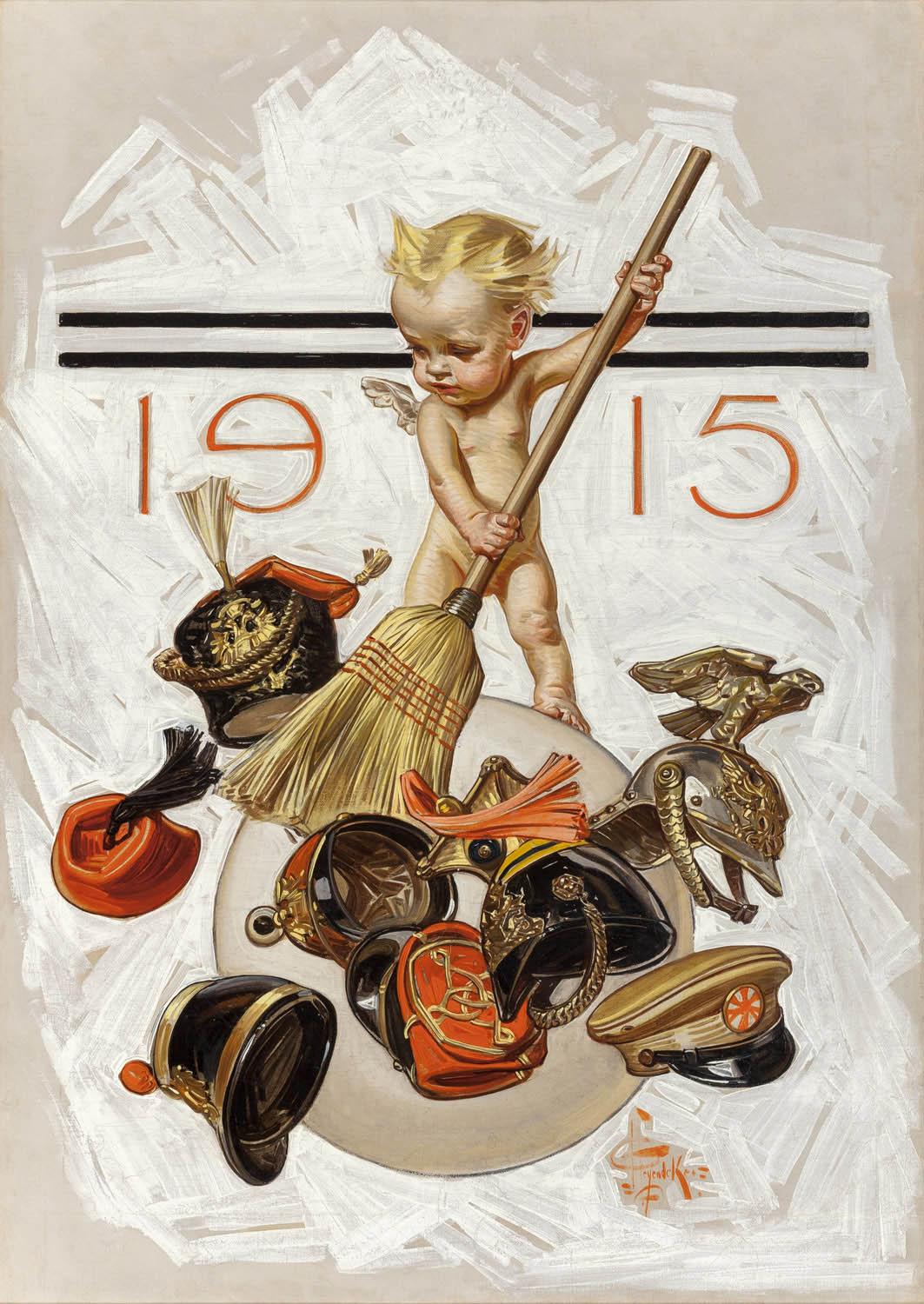
J.C. Leyendecker (1874-1951)
New Year's Baby 1915
1914, oil on canvas
30" x 21 1/2", signed lower right
Saturday Evening Post, January 2, 1915 cover
This New Year’s Baby was painted for the 1915 Saturday Evening Post cover, well before US entered World War I. Leyendecker has portrayed all the contenders in the War at that time through the depiction of their respective military helmets, hoping the New Year would see the War swept away. The helmets portrayed are:
- Black hat with gold tassel is Russian
- Red fez is Ottoman Turk Army
- Hat with red pom is Belgian
- Upside down hat under broom is Austria-Hungary
- Red hat is French Army officer’s Kepi
- Black hat with red tassel is British
- Gold Eagle is German/Prussian
- Khaki cloth hat is Imperial Japanese Army
J.C. Leyendecker (1874-1951)
New Year's Baby 1917 - Europe at War
1916, oil on canvas
24" x 18 1/2", signed lower right
Saturday Evening Post, December 30, 1916 cover
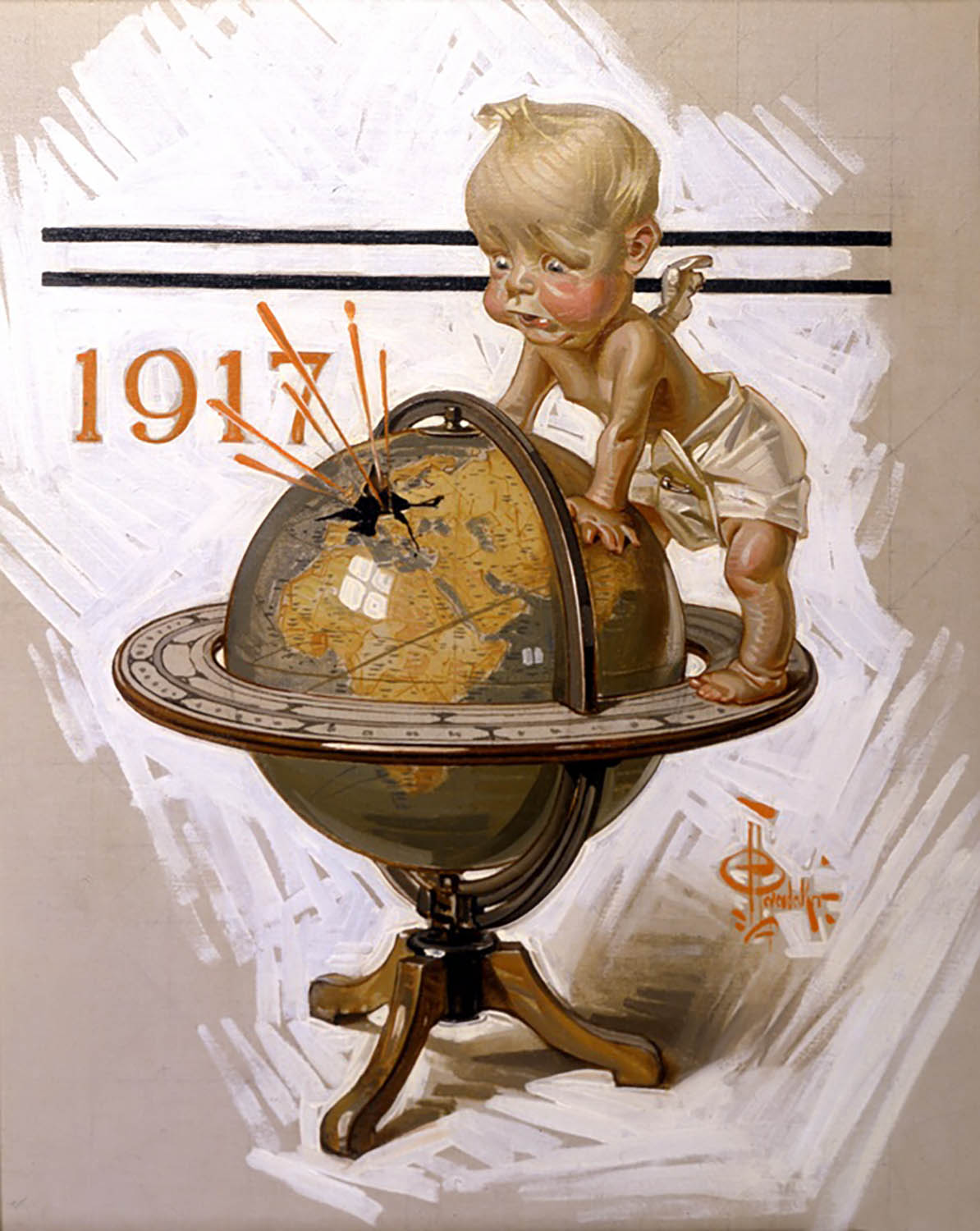
J.C. Leyendecker’s 1917 Saturday Evening Post New Year’s Baby cover places the infant on the edge of a globe rocked by violence, with an explosion erupting from Europe. Created during the height of World War I, the image captures a moment of profound global uncertainty. The New Year’s Baby stands as a symbol of fragile hope and moral reckoning, confronting a world destabilized by conflict. By juxtaposing innocence with destruction, Leyendecker suggests a turning point—asking whether the coming year might bring renewal and responsibility in the face of war, or whether humanity would continue along its destructive path.
J.C. Leyendecker (1874-1951)
New Year's Baby 1919 - Dove
1918, oil on canvas
27" x 19", signed lower right
Saturday Evening Post, December 28, 1918 cover
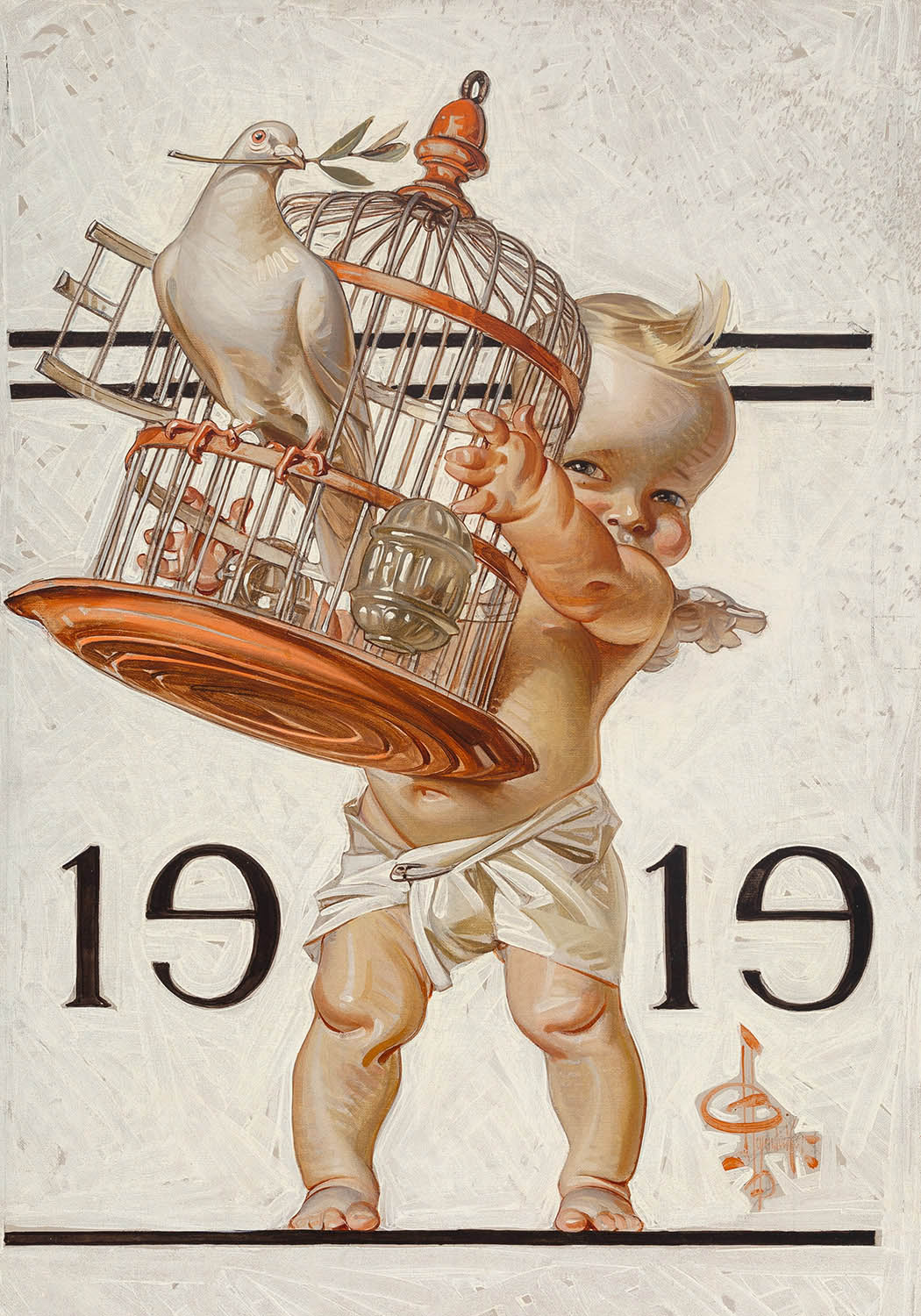
Created at a time of turmoil for the World, Leyendecker painted this 1919 New Year's Baby to commemorate the November 11, 1918 Armistice ending World War 1. The cherub, a symbol of fresh beginnings, looks directly at the viewer as he releases a dove of peace holding an olive branch in its beak into the World. With its message of world peace, this cover would have powerfully resonated with the American public, who were still reeling from the various horrors of 1918.
J.C. Leyendecker (1874-1951)
New Year's Baby 1922
1921, oil on canvas
21 1/2" x 16 3/4", signed lower left
Saturday Evening Post, December 31, 1921 cover
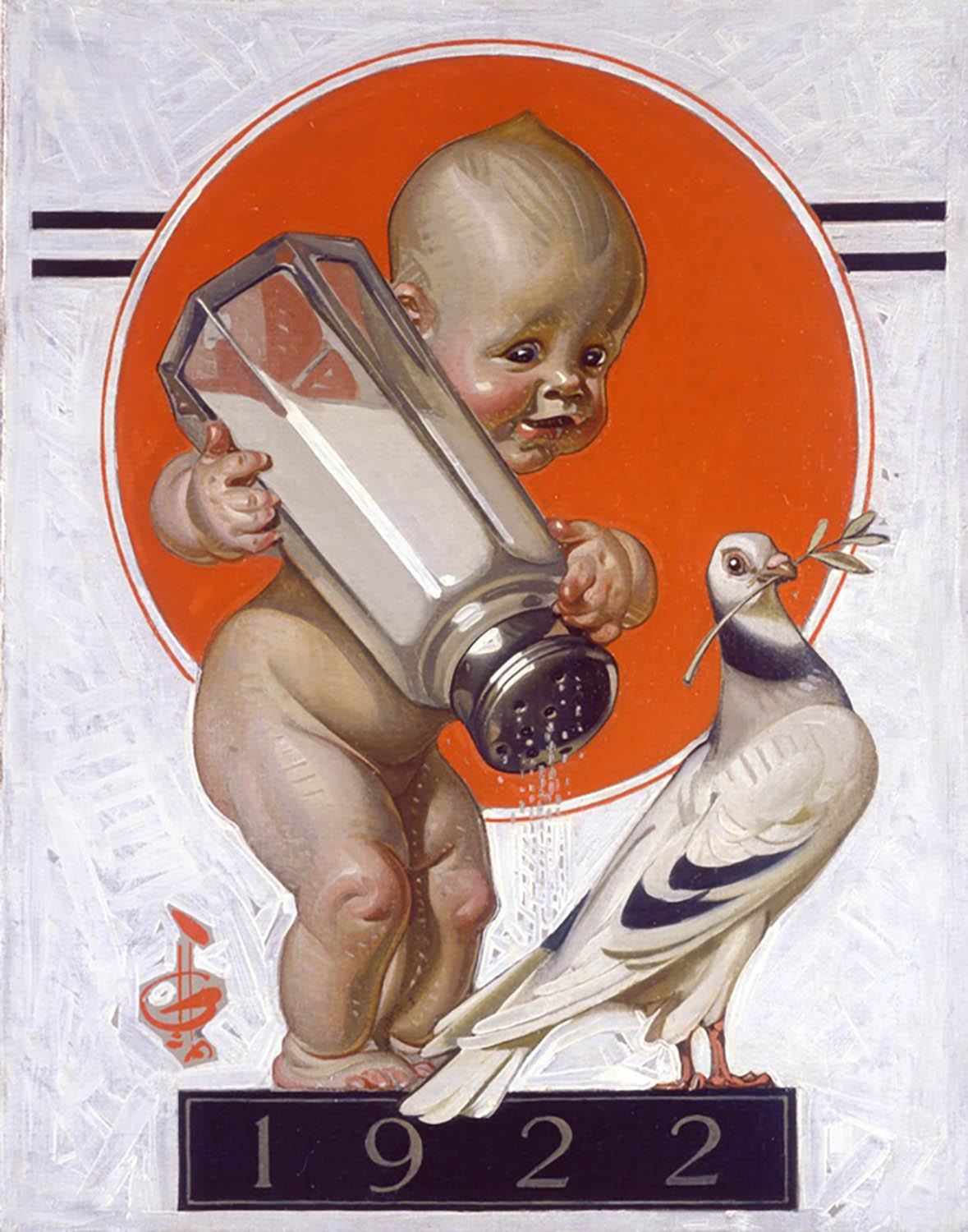
J.C. Leyendecker’s 1922 Saturday Evening Post New Year’s Baby cover presents a quietly hopeful image in the aftermath of World War I. The baby gently sprinkling salt onto a dove carrying an olive branch evokes ideas of preservation, healing, and protection. Long associated with peace, the dove here is being carefully tended, suggesting that peace itself is fragile and must be actively sustained. Leyendecker transforms the New Year’s Baby into a guardian of reconciliation, symbolizing the hope that the coming year might safeguard peace and allow recovery after years of global upheaval.
J.C. Leyendecker (1874-1951)
New Year's Baby 1924
1923, oil on canvas
25 1/4" x 18 1/2", signed lower right
Saturday Evening Post, December 29, 1923 cover
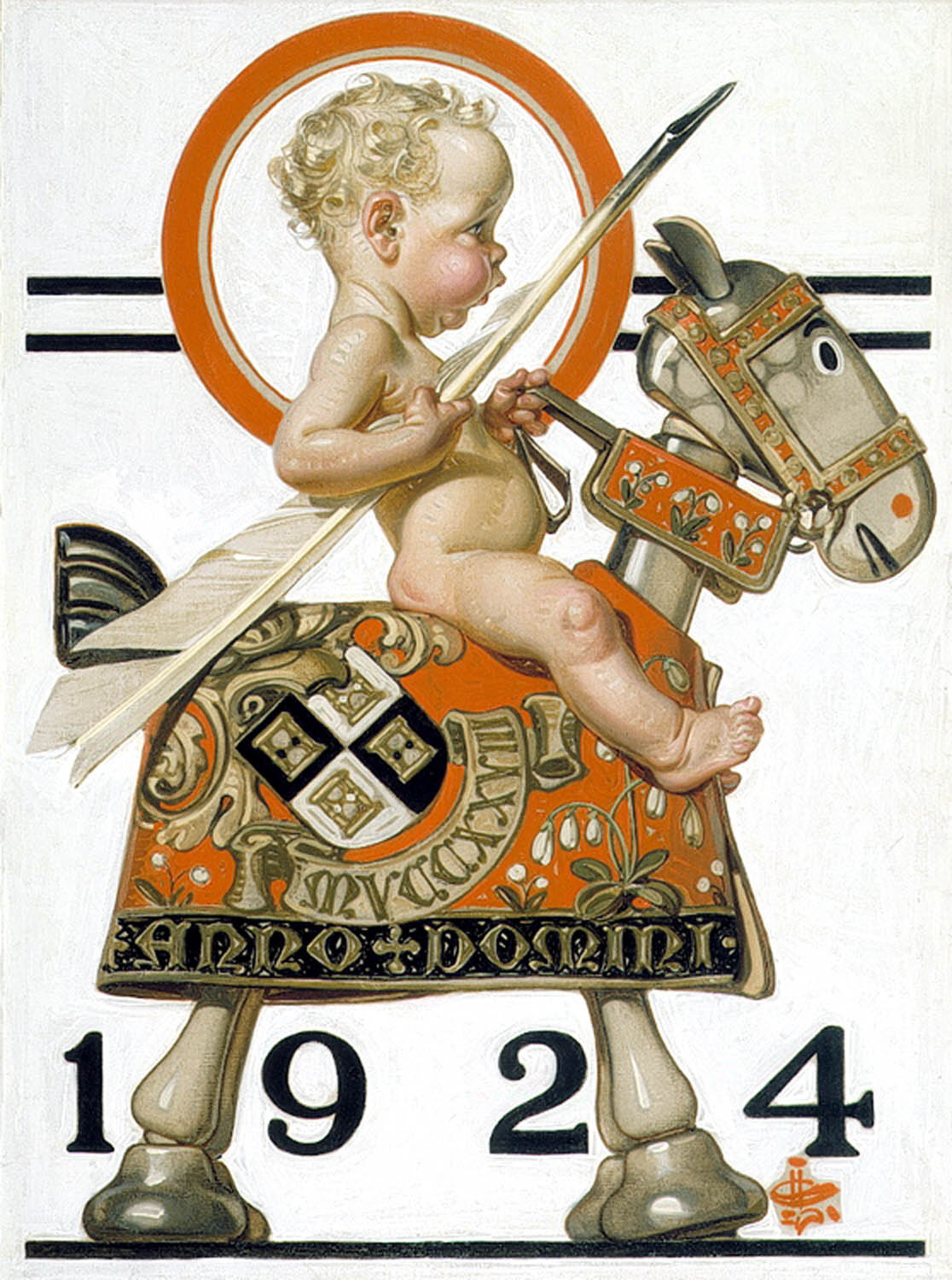
J.C. Leyendecker’s 1924 Saturday Evening Post New Year’s Baby cover casts the infant as a playful yet purposeful knight-in-training. Perched on a toy horse outfitted like a medieval jousting steed and wielding a feather pen as a lance, the baby blends innocence with imagination and intellect. The image suggests that the battles of the modern age are no longer fought solely with force, but with ideas, words, and creativity. Leyendecker’s New Year’s Baby becomes a symbol of youthful courage and the promise that the coming year will be shaped by wit, expression, and thoughtful engagement rather than brute strength.
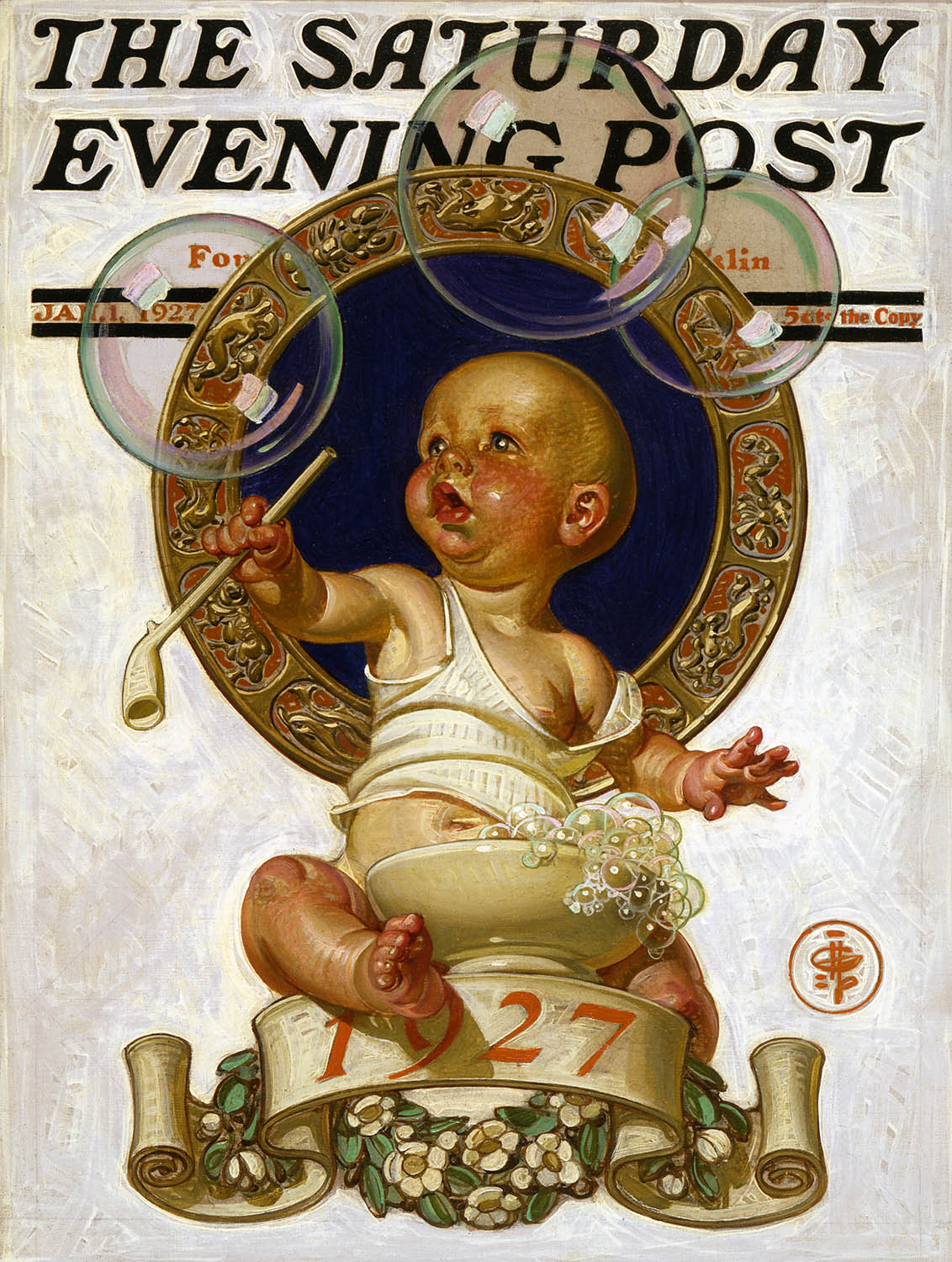
J.C. Leyendecker (1874-1951)
New Year's Baby 1927
1926, oil on canvas
26" x 20", signed lower right
Saturday Evening Post, January 1, 1927 cover
J.C. Leyendecker’s 1927 Saturday Evening Post New Year’s Baby cover depicts the infant delighting in the simple act of blowing soap bubbles—shimmering, weightless, and momentary. Created during a period of postwar optimism and economic expansion, the image celebrates wonder, play, and the beauty of fleeting moments. At the same time, the fragile bubbles serve as a gentle reminder of life’s impermanence and uncertainty. Leyendecker balances joy with subtle caution, suggesting that the new year is filled with bright possibilities, but that they must be cherished before they drift away.
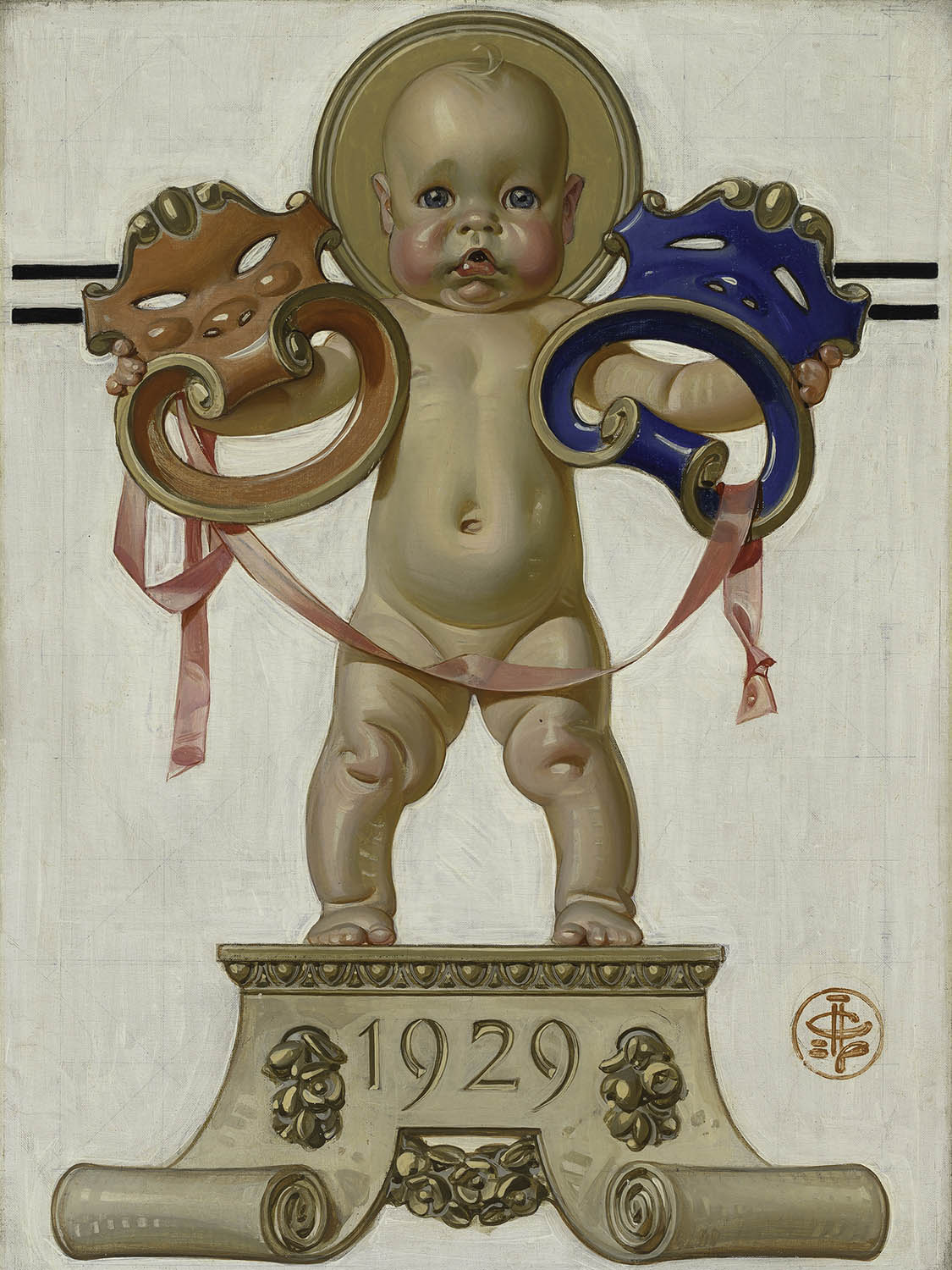
J.C. Leyendecker (1874-1951)
New Year's Baby 1929
1928, oil on canvas
28" x 21", signed lower right
Saturday Evening Post, December 29, 1928 cover
J.C. Leyendecker’s 1929 Saturday Evening Post New Year’s Baby cover presents the infant holding the twin theater masks of comedy and tragedy, linked by a soft pink ribbon. The image draws on a classical symbol of human experience, suggesting that the coming year will contain both joy and sorrow, laughter and loss. Poised on the threshold of a new decade, the New Year’s Baby becomes a quiet arbiter of balance, acknowledging life’s inevitable contrasts. With characteristic subtlety, Leyendecker suggests that hope and hardship are inseparable—and that the new year will unfold as a shared drama of both light and shadow.
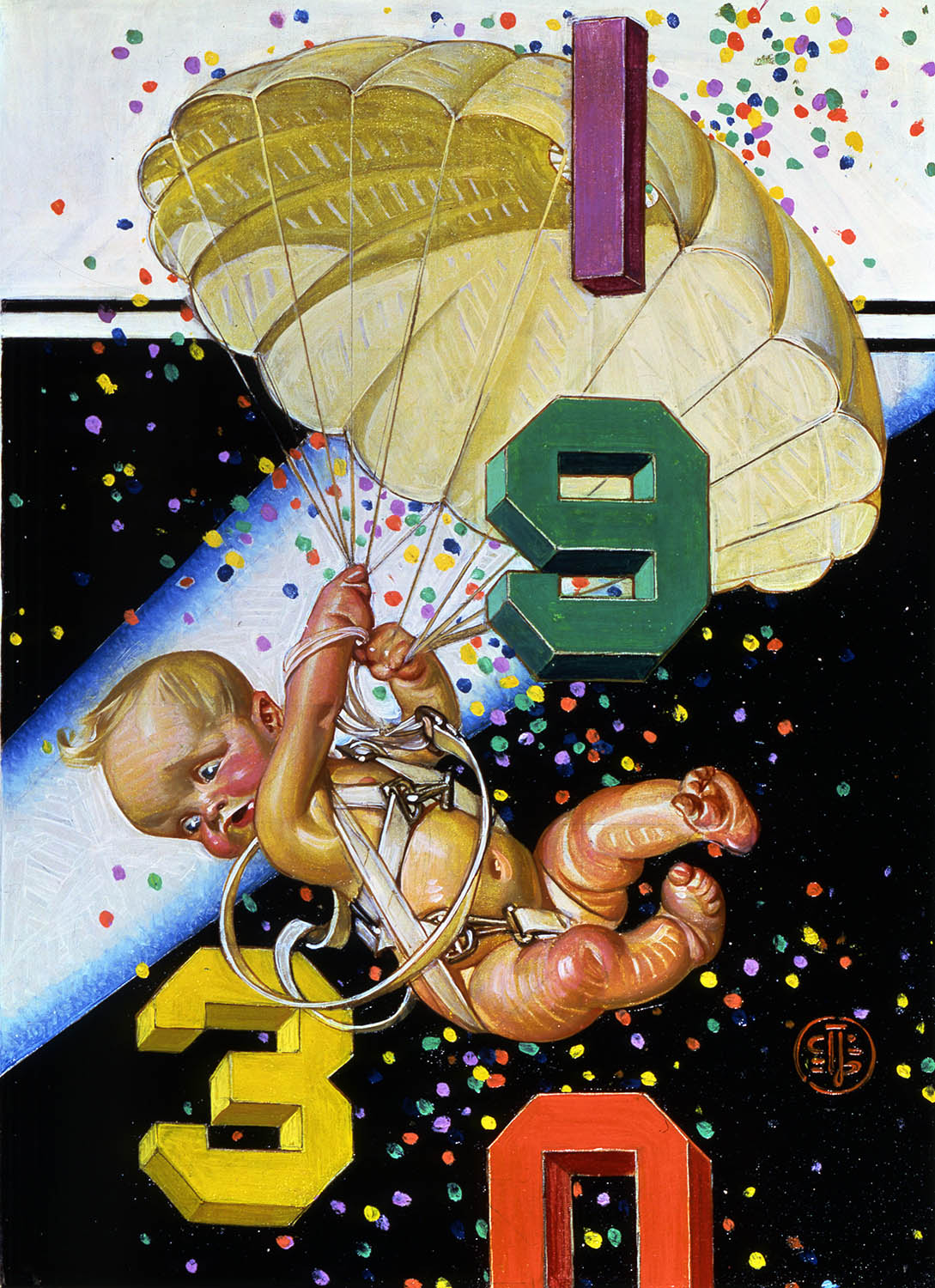
J.C. Leyendecker (1874-1951)
New Year's Baby 1930
1929, oil on canvas
26" x 21", signed lower right
Saturday Evening Post, December 28, 1929 cover
J.C. Leyendecker’s 1930 Saturday Evening Post New Year’s Baby cover captures a moment of uneasy descent: the infant clings to a parachute, wide-eyed and anxious, drifting downward amid celebratory confetti. Created in the immediate aftermath of the 1929 stock market crash, the image reflects a nation entering the new year with uncertainty rather than confidence. The falling baby suggests a loss of stability, while the lingering confetti hints at optimism that has not yet fully faded. Leyendecker poignantly symbolizes a year suspended between hope and fear, as America confronted the sobering realities of a changed economic and social environment.
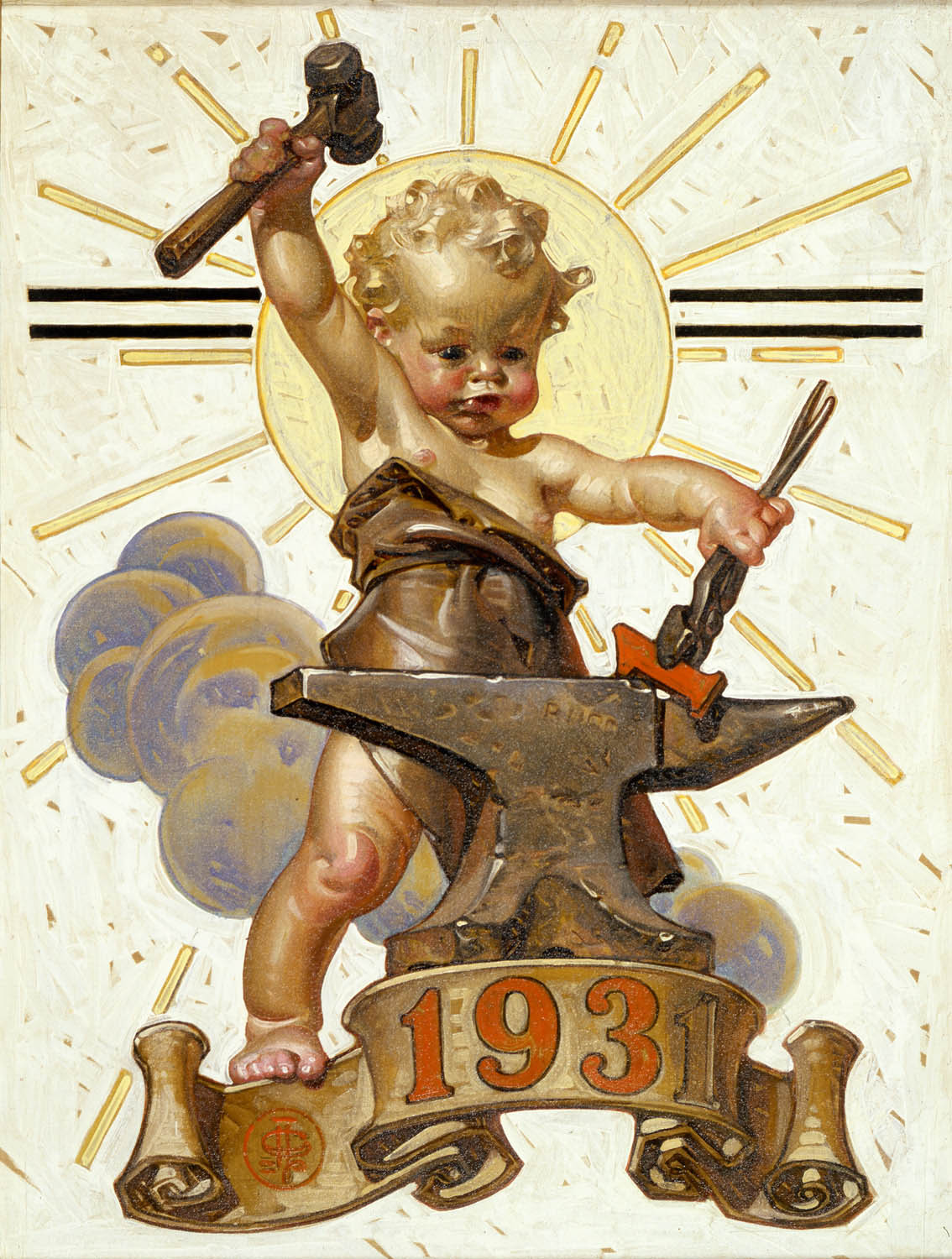
J.C. Leyendecker (1874-1951)
New Year's Baby 1931
1930, oil on canvas
32" x 24", signed lower left
Saturday Evening Post, December 27, 1930 cover
In this playful and iconic cover, Leyendecker’s New Year’s baby wields a hammer over an anvil, shaping the number “1” to complete the year 1931. The image symbolizes renewal, creation, and the human hand in shaping the future—an optimistic call to begin the year with purpose and possibility. Leyendecker transforms the New Year into a literal work of art, blending charm, craftsmanship, and the promise of fresh beginnings with the rays of the sun extend brilliantly behind the baby.
J.C. Leyendecker (1874-1951)
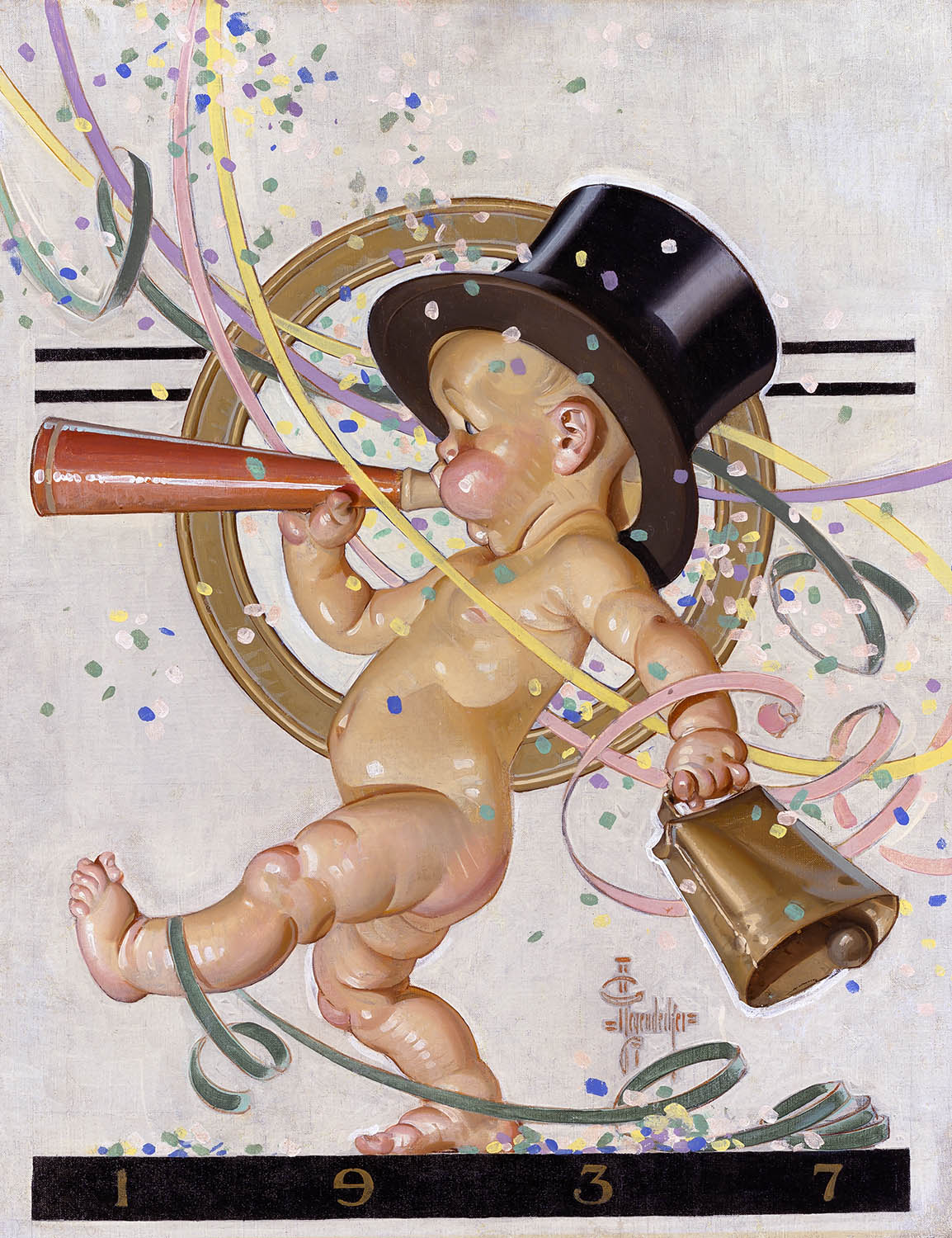
New Year's Baby 1937
1936, oil on canvas
30" x 22 3/4", signed lower right
Saturday Evening Post, January 2, 1937 cover
J.C. Leyendecker’s 1937 Saturday Evening Post New Year’s Baby cover returns to celebration with renewed spirit. Dressed in a jaunty top hat, ringing a cowbell, and blowing a paper horn as confetti and streamers rain down, the baby embodies resilience and hard-won optimism. Created in the midst of the Great Depression, the image suggests a conscious choice to celebrate despite lingering hardship. Leyendecker presents the New Year not as naïve triumph, but as a defiant act of joy—symbolizing the enduring human impulse to mark new beginnings and believe in better days ahead.
J.C. Leyendecker (1874-1951)
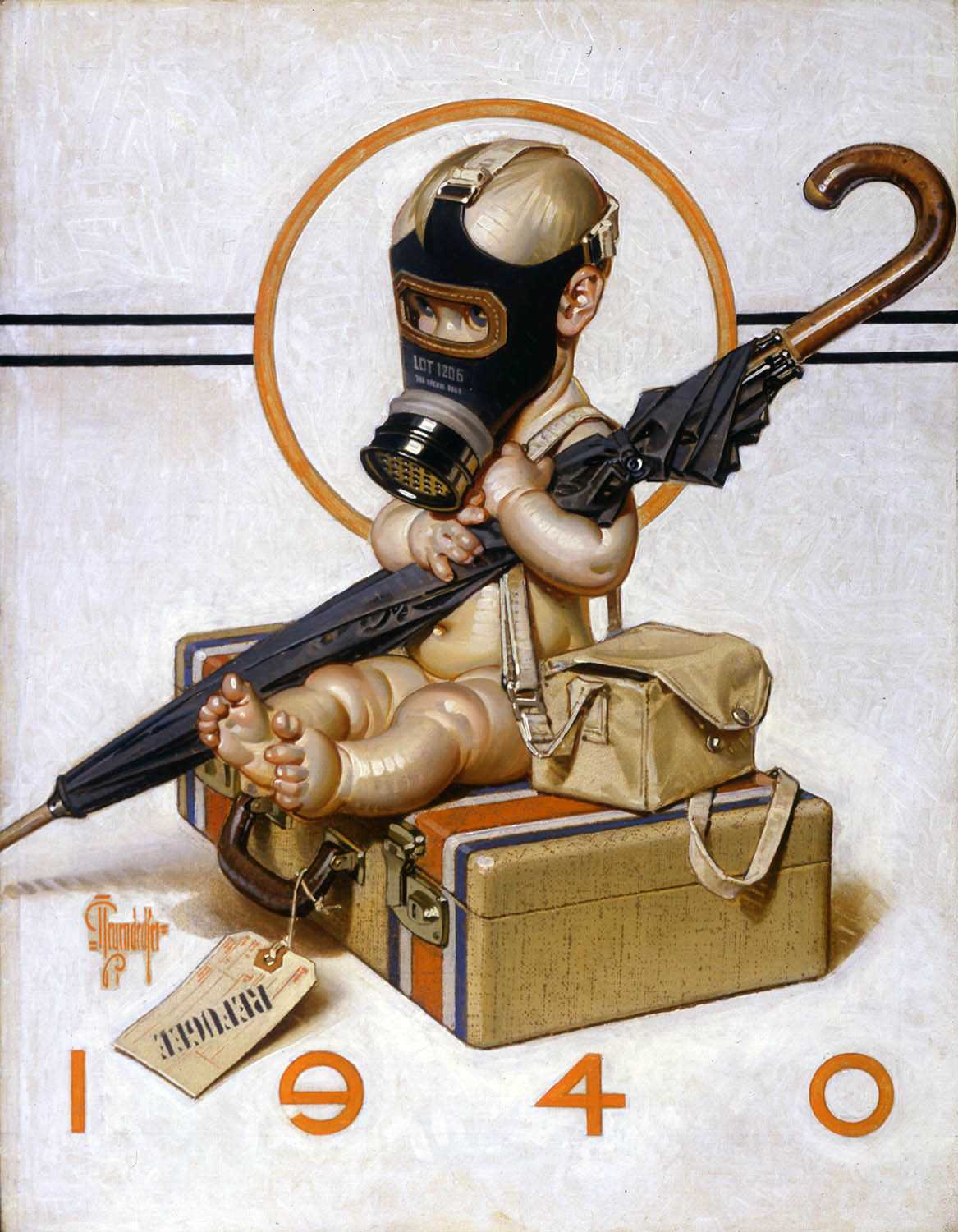
New Year's Baby 1940
1939, oil on canvas
31 1/2" x 24", signed lower left
Saturday Evening Post, December 30, 1939 cover
J.C. Leyendecker’s 1940 Saturday Evening Post New Year’s Baby cover delivers a stark and sobering image of a world on the brink. The infant, wearing a gas mask and seated on a suitcase labeled “Refugee,” clutches a black umbrella—symbols of displacement, fear, and looming danger. Created as war engulfed Europe, the cover reflects the loss of innocence and the human cost of global conflict. Leyendecker transforms the New Year’s Baby from a figure of celebration into a witness of crisis, underscoring how the coming year would be shaped not by optimism alone, but by endurance, uncertainty, and the urgent realities of a world at war.