

American
Spring
Spring has always held a special place in the American imagination. It is a season of transition—where the stillness of winter gives way to movement, color, and life. For illustrators of the late nineteenth and early twentieth centuries and beyond, this transformation offered rich visual and emotional material, allowing them to explore themes of renewal, youth, and optimism.
In these works, spring is expressed in many forms: the bloom of flowers, the rituals of Easter and May Day, the laughter of children, and the quiet rhythms of daily life. Artists such as Howard Pyle, Jessie Willcox Smith, and J. C. Leyendecker elevated these moments, transforming them into images that resonated deeply with a broad American audience through magazines, advertisements, and books.
At a time when illustration shaped the visual culture of the nation, these images helped define a collective sense of seasonal renewal—one rooted not only in nature, but in human experience. They remind us that growth often begins in small, familiar moments, and that optimism, like spring itself, returns again and again.
As the United States marks 250 years, An American Spring invites us to consider how illustrators have shaped not only how we see the world, but how we feel about it—offering enduring images of hope, growth, and possibility.
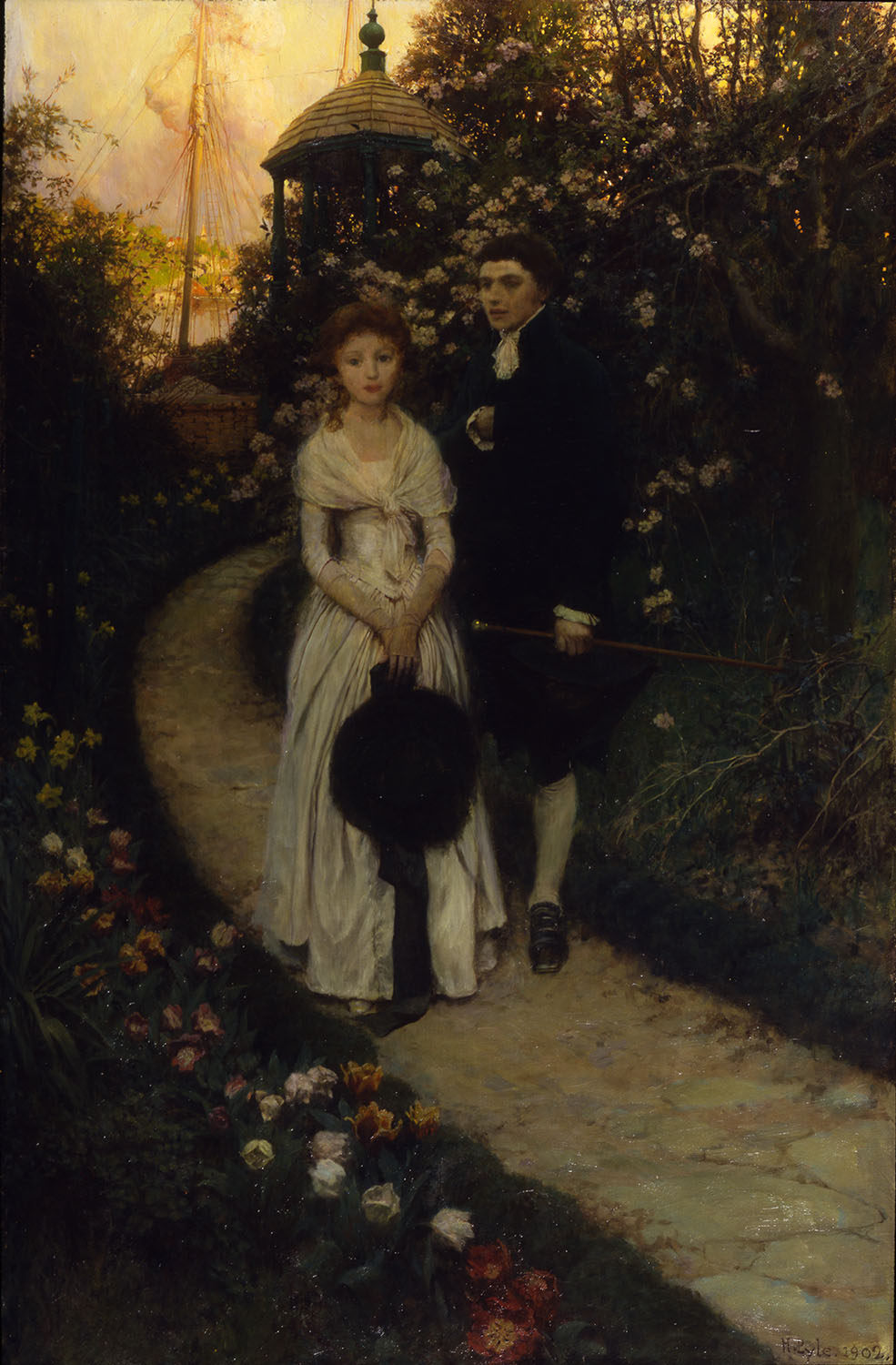
Howard Pyle (1853-1911)
The Garden of Youth
1902, oil on canvas
39 1/2" x 25 1/4", signed and dated lower right
In The Garden of Youth, Howard Pyle creates an idyllic vision of renewal that feels both timeless and distinctly American. Painted on a notably large scale for the artist, the canvas allows Pyle to fully immerse the viewer in a world where nature, youth, and imagination exist in harmonious balance. The composition unfolds with a sense of quiet grandeur, elevating what might otherwise be a simple pastoral scene into something almost mythic.
At first glance, the focus rests on the figures and the lush garden setting—symbols of vitality, innocence, and the promise of growth. Yet in the distance, Pyle introduces a subtle but evocative detail: the mast of a ship rising above a harbor. This glimpse of maritime life anchors the scene in a recognizable coastal environment, lending it a distinctly New England character. One can easily imagine this garden overlooking the shores of Newport, Rhode Island, where cultivated beauty meets the vast openness of the sea.
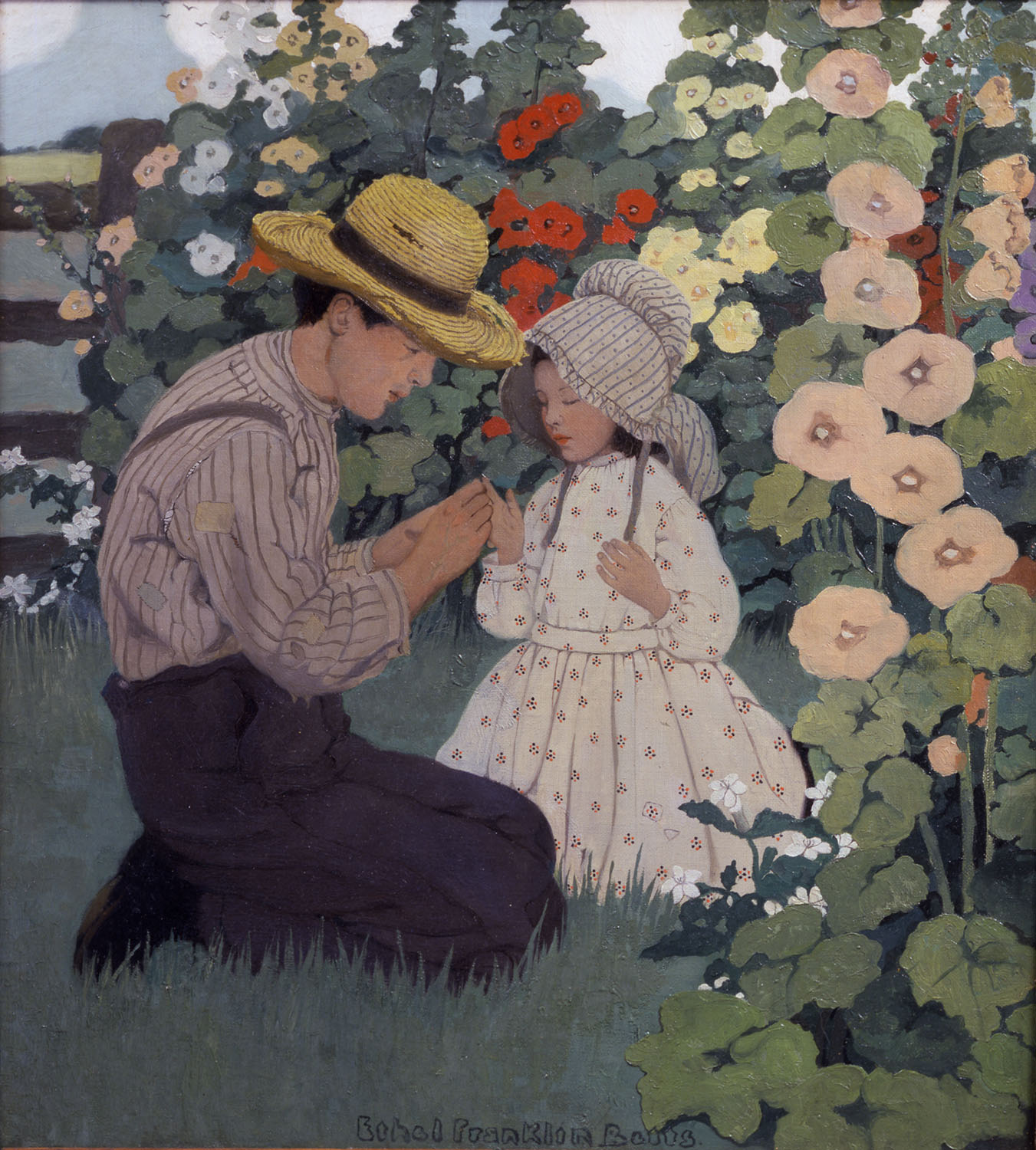
Ethel Franklin Betts (1878-1956)
The Bumblebee
1909, oil on canvas
17 1/2" x 16", signed lower center
The Raggedy Man, by James Whitcomb Riley, The Bobbs-Merrill Company, 1909, cover
In The Bumblebee, Ethel Franklin Betts brings together her refined draftsmanship and sensitivity to childhood experience in a scene that is at once gentle, instructive, and quietly humorous. Trained at the Pennsylvania Academy of the Fine Arts and later under Howard Pyle at Drexel and his Delaware school, Betts developed a distinctive style admired for its delicate line and graceful composition—qualities that made her especially sought after as an illustrator of children’s books and stories.
This image was created for a 1909 edition of The Raggedy Man by James Whitcomb Riley, a beloved collection of poems told from the perspective of children. Set against the broader theme of spring, the bumblebee itself becomes a fitting symbol—seemingly slow and harmless, yet full of hidden energy and consequence. Betts’s composition reflects the season’s spirit of discovery, when children venture outdoors and encounter the natural world firsthand, learning through experience. At the same time, the image speaks to growth: the passage from innocence to understanding, guided by patience and care.
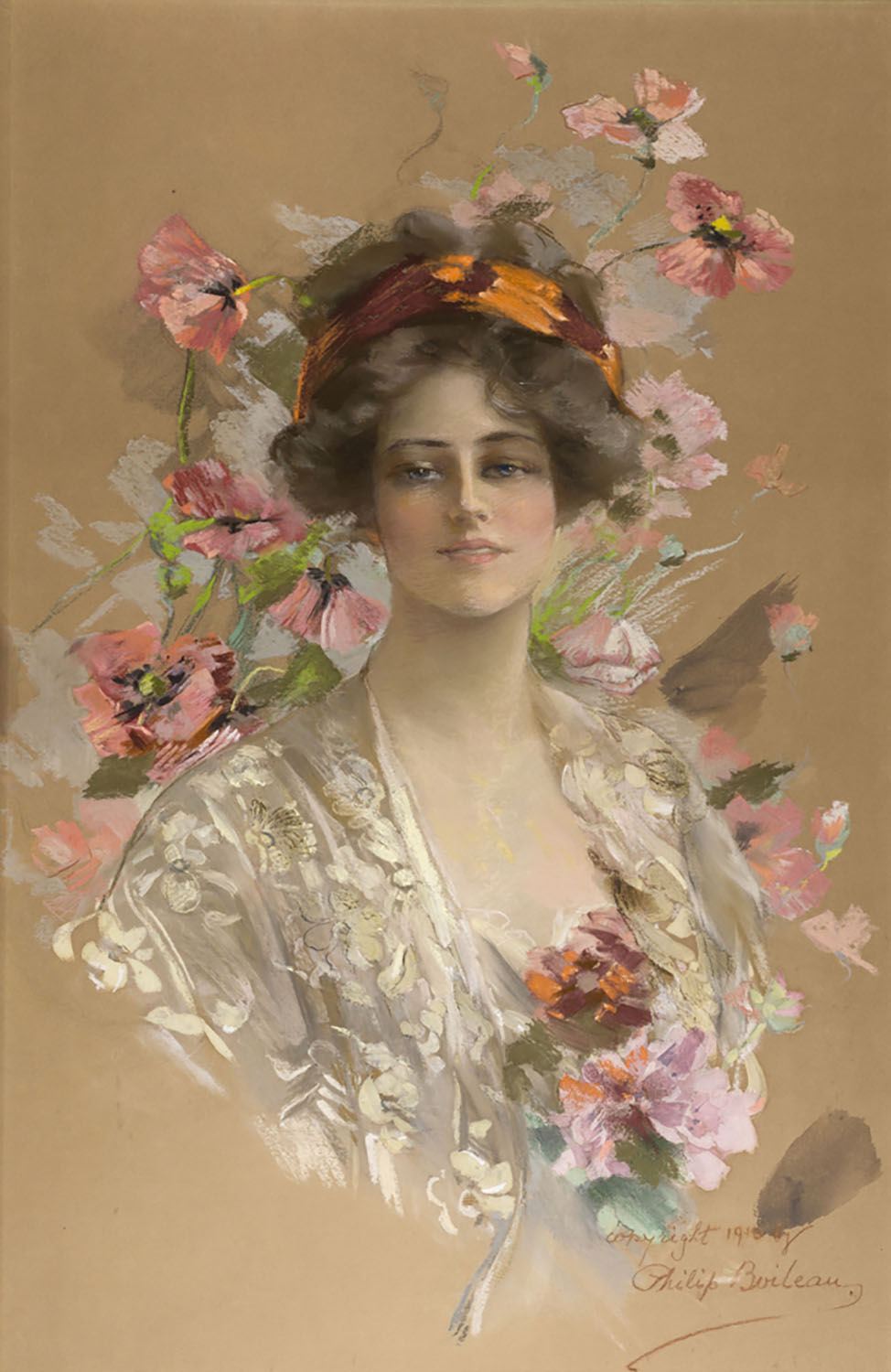
Philip Boileau (1864-1917)
Red Poppies
1909, watercolor, gouache and pastel on paper
27 1/4" x 17 1/2", signed lower right
Osborne Co. calendar illustration, 1910
In Red Poppies, Philip Boileau presents a striking vision of beauty and refinement, characteristic of the elegant women who defined his work. Known for his mastery of watercolor and pastel, Boileau imbues the figure with a softness and luminosity that feels both immediate and idealized. Set among vivid blooms, the woman appears as an extension of the natural world itself—her poise and grace mirroring the delicate yet vibrant life of the poppies that surround her.
Created as a calendar illustration for 1910, the image celebrates both the fleeting beauty of the season and the aspirational ideals of the Gilded Age. The poppy, with its brief but brilliant bloom, becomes a fitting symbol of spring’s intensity and transience, while Boileau’s refined figure reflects a culture attuned to elegance and display. Together, they form a harmonious vision of renewal—where nature and femininity intertwine in a moment of radiant, passing perfection.
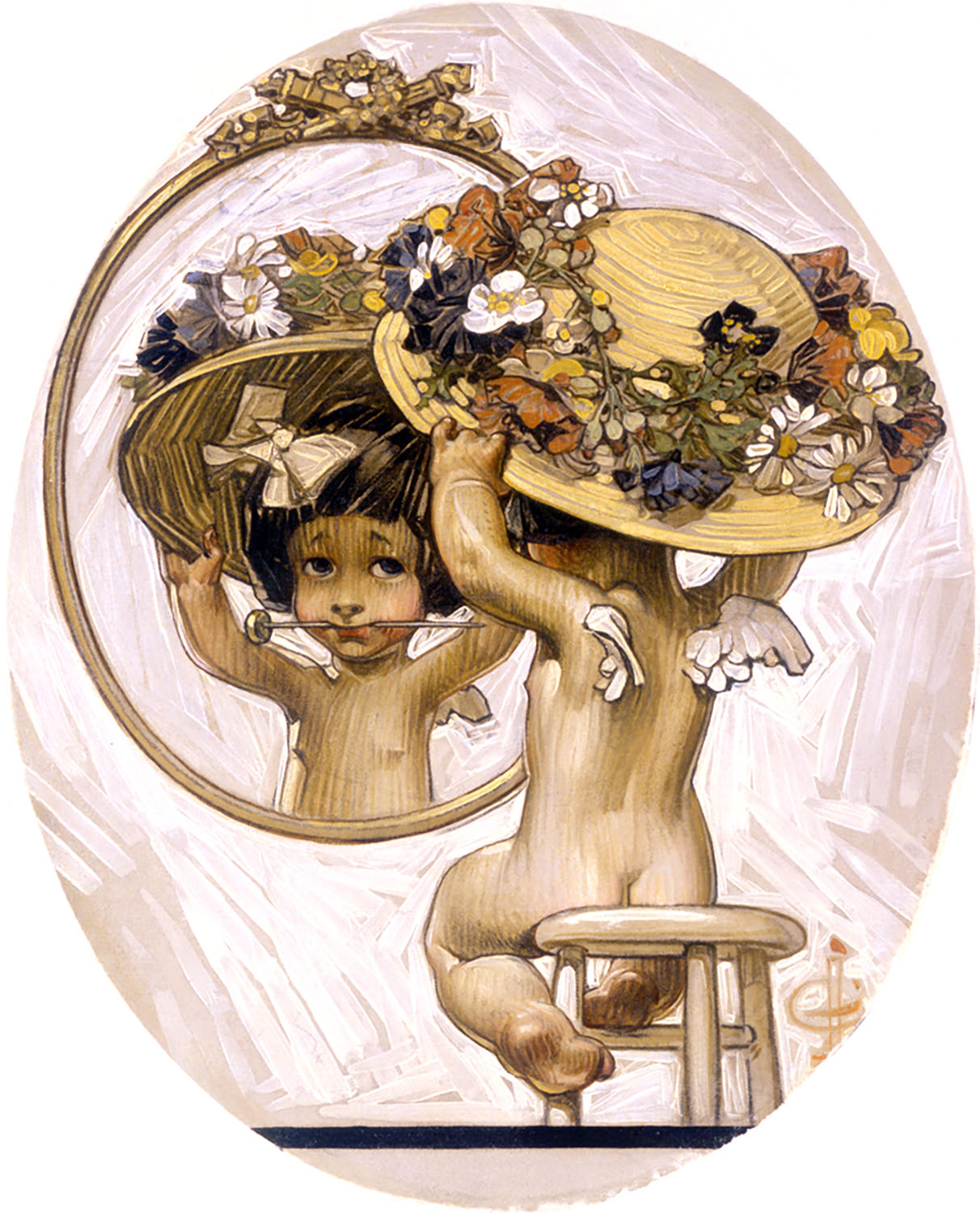
J.C. Leyendecker (1874-1951)
Easter - Girl with Bonnet
1910, oil on canvas
22" x 18", signed lower right
Saturday Evening Post, March 26, 1910 cover
In this elegant Easter cover for The Saturday Evening Post, J. C. Leyendecker combines refinement with playful symbolism through his use of a cherubic figure—an artistic device he frequently employed for holiday imagery. Much like his iconic New Year’s Baby, the cherub here embodies innocence, renewal, and the cyclical nature of time, serving as a visual shorthand for the spirit of the season. The young girl, adorned in a fashionable bonnet, reflects both the traditions of Easter and the aspirational style that defined Leyendecker’s work.
Leyendecker masterfully blends sacred and secular themes, transforming a religious holiday into a modern cultural moment. The crisp lines, luminous palette, and idealized form elevate the scene beyond simple illustration, capturing the optimism and freshness of spring. Through this harmonious composition, Leyendecker presents Easter not only as a celebration of rebirth, but as an expression of beauty, youth, and the enduring appeal of renewal in American life.
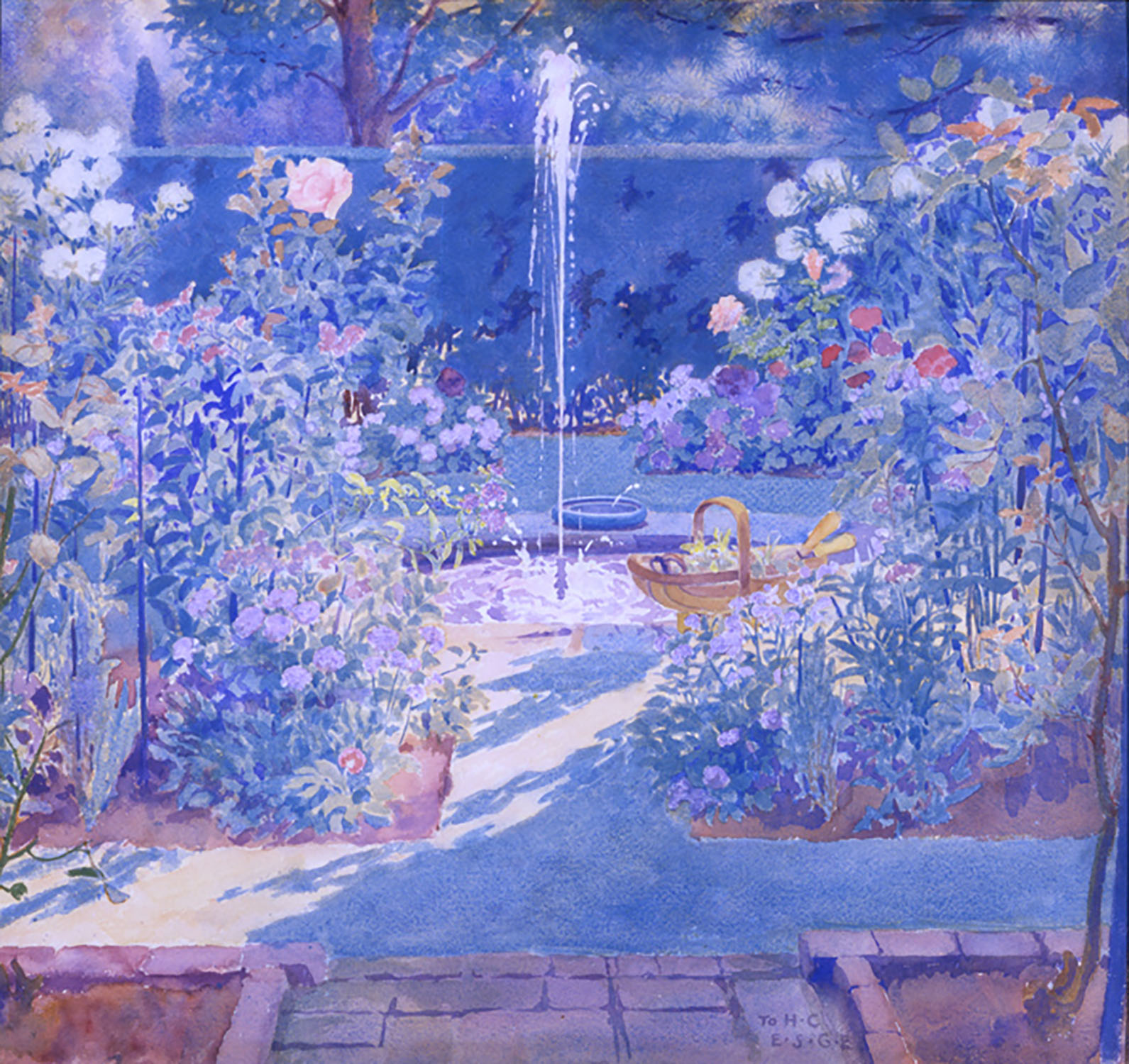
Elizabeth Shippen Green (1871-1954)
Garden at Cogshill
c. 1912, watercolor on board
20" x 22", signed and inscribedlower right
In Garden at Cogshill, Elizabeth Shippen Green captures a serene and deeply personal view of the artistic community she shared with Violet Oakley and Jessie Willcox Smith—known collectively as the “Red Rose Girls.” After first living at the Red Rose Inn while studying under Howard Pyle, the trio established a permanent home in 1906 at “Cogslea” in the Mount Airy section of Philadelphia, where a converted carriage house and barn provided ideal studio space. Their collaborative life fostered some of the most important illustration work of the period, grounded in both creative exchange and a shared vision.
By the time this work was painted, however, that close-knit world was beginning to shift. Green’s 1911 marriage to Huger Elliott, held at Cogslea, marked a turning point that altered the dynamic of the household. The sense of unity that had defined the Red Rose Girls gradually dissolved, and by 1914 Oakley had purchased Cogslea, while Smith and Henrietta Cozens moved nearby to a new home they called “Cogshill.” Against this backdrop, Green’s tranquil garden scene takes on added resonance—embodying a moment of stillness, reflection, and quiet renewal, even as the bonds of one of America’s most remarkable artistic partnerships began to evolve.
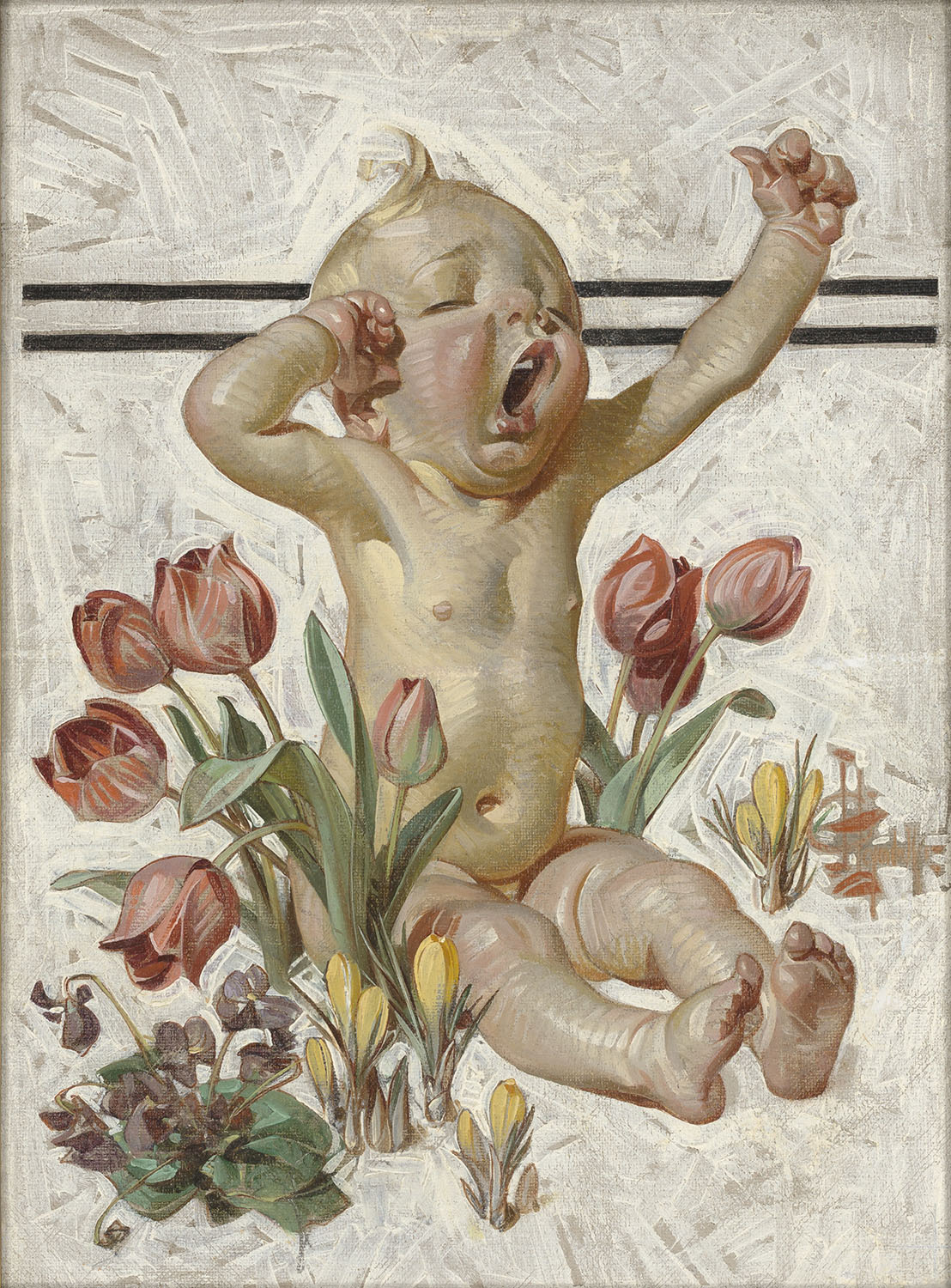
J.C. Leyendecker (1874-1951)
Spring Has Sprung
1917, oil on canvas
27" x 20", signed center right
Saturday Evening Post, April 7, 1917 cover
In Spring Has Sprung, J. C. Leyendecker once again turns to the cherubic child as a symbol of seasonal renewal, a motif he famously employed in his holiday covers. Here, the baby awakens from winter’s long dormancy, stretching upward among blooming tulips in a moment that is both humorous and full of life. With characteristic wit, Leyendecker likens the arrival of spring to a kind of joyful reawakening—nature itself stirring, stretching, and coming back to life after months of stillness.
The composition captures the lightness and optimism associated with the season, as the child’s animated pose mirrors the upward growth of the surrounding flowers. Leyendecker’s clean lines and vibrant palette reinforce this sense of freshness and vitality, transforming a simple gesture into a visual metaphor for renewal. As both a celebration of Easter and a broader reflection on spring’s return, the image embodies the enduring appeal of rebirth, energy, and new beginnings in American life.
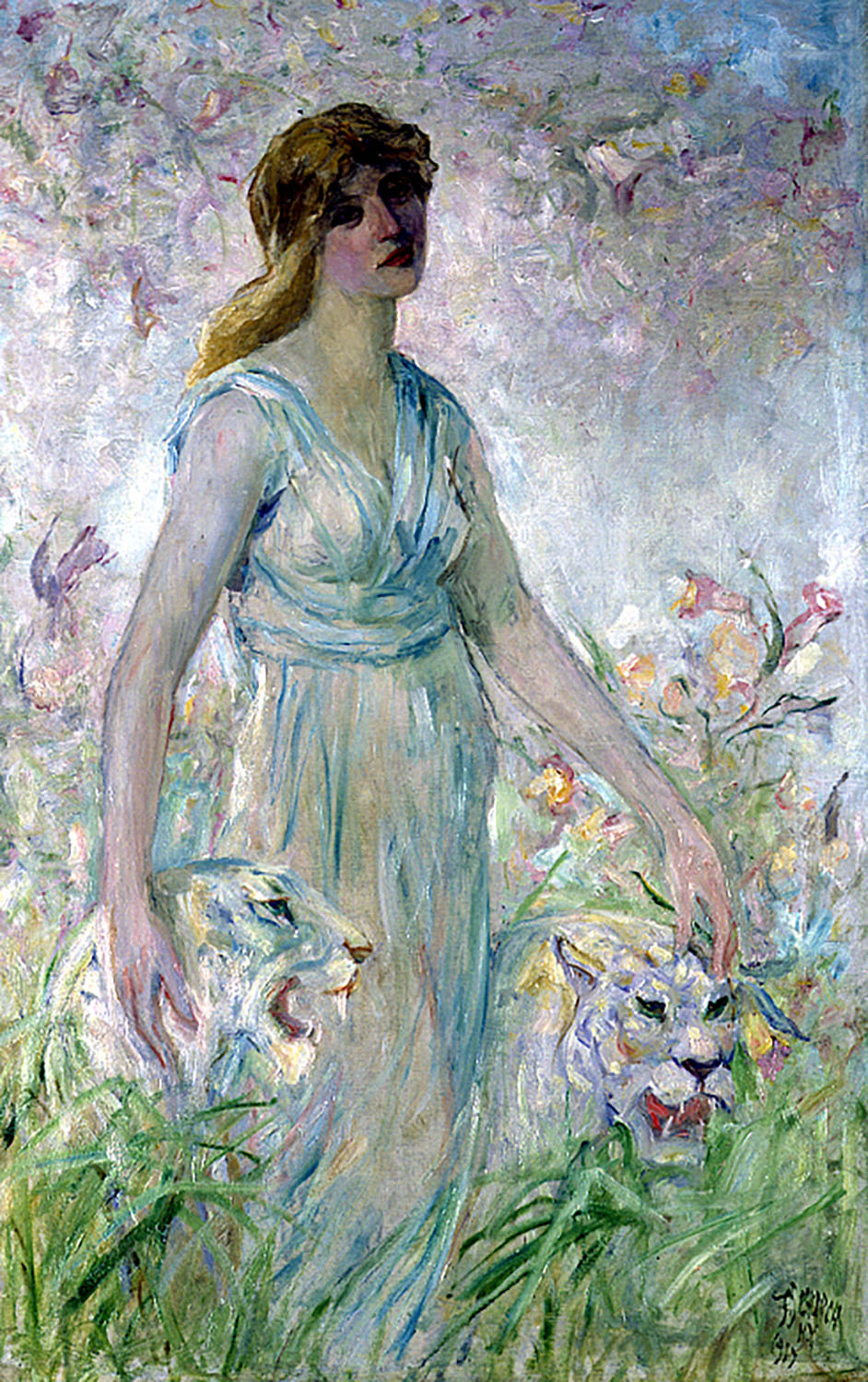
Frederick Stuart Church (1842-1927)
Orchids and White Leopards
1919, oil on canvas
47 1/4" x 30 1/4", signed and dated lower right
In Orchids and White Leopards, Frederick Stuart Church creates a lush and dreamlike vision in which the boundaries between nature and fantasy dissolve. Known for his imaginative compositions and affinity for animals, Church pairs the sleek, powerful forms of the white leopards with the delicate, exotic beauty of orchids in full bloom. The result is a striking harmony of strength and elegance, where predator and flora coexist in a world untouched by time.
Painted at the height of his mature career, the work reflects Church’s fascination with the symbolic possibilities of nature. The orchids, rare and fleeting in their bloom, evoke the richness and vitality of spring, while the leopards suggest grace, mystery, and latent energy. Together, they form an image of renewal that is both sensual and serene—an idealized realm where life flourishes in abundance, and the natural world is imbued with quiet wonder.
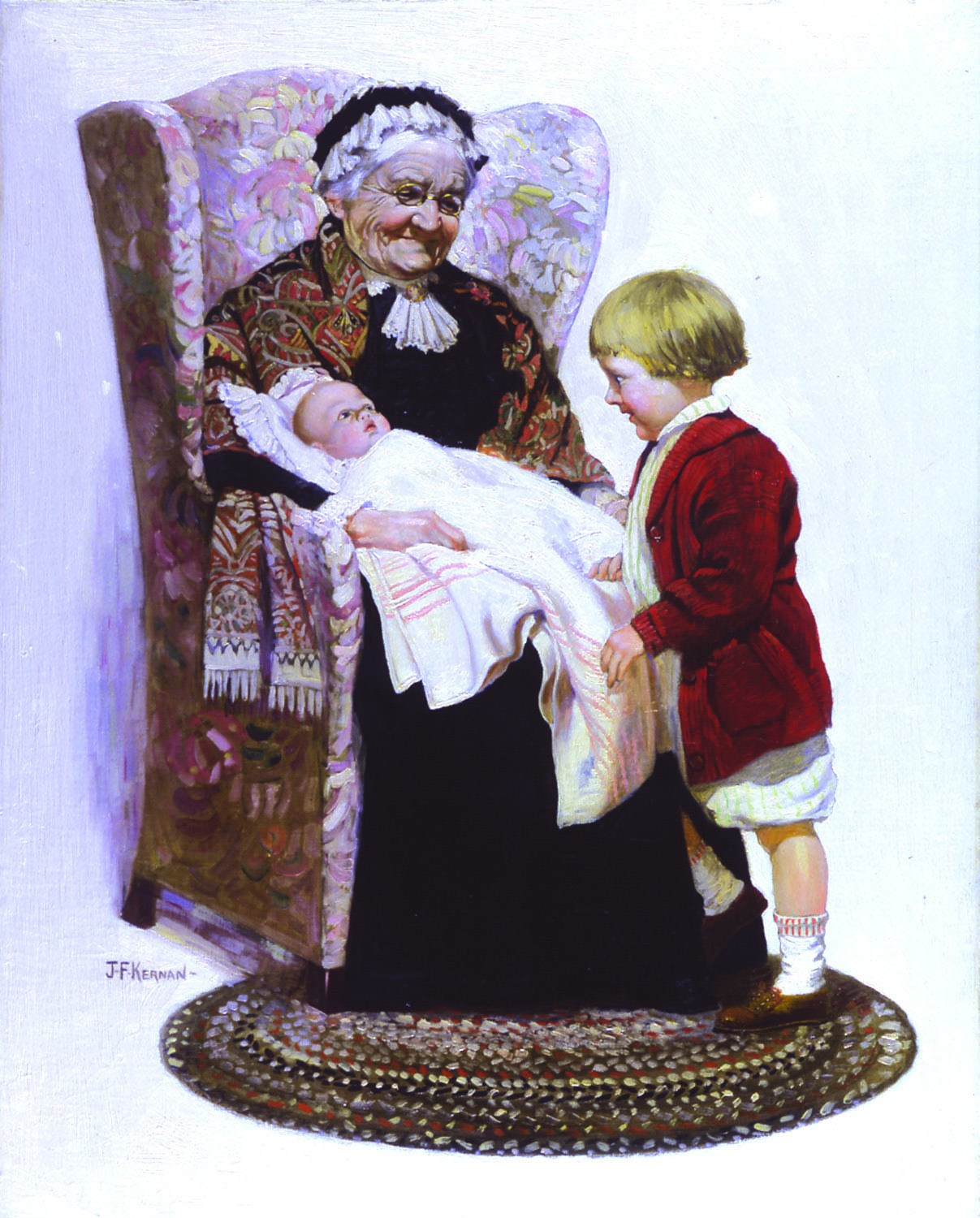
J.F. Kernan (1878-1958)
New Baby
1919, oil on canvas
23" x 30", signed lower left
Judge Magazine, March 5, 1919 cover
In New Baby, J. F. Kernan captures the joyful disruption that accompanies the arrival of new life, presenting a scene that is both humorous and deeply human. Created for the March 5, 1919 cover of Judge magazine, the image reflects the publication’s signature wit, as the household adjusts—perhaps chaotically—to its newest and most demanding member. Kernan’s lively composition and expressive figures convey the mixture of excitement, exhaustion, and wonder that defines such a moment.
Set within the broader context of spring, the newborn becomes a natural symbol of renewal and continuity. Just as the season marks the reawakening of the world, the child represents a fresh beginning within the home—a promise of growth, change, and the future. Through humor and warmth, Kernan transforms a familiar domestic scene into a reflection on life’s enduring cycles, where each new arrival brings with it both challenge and boundless possibility.
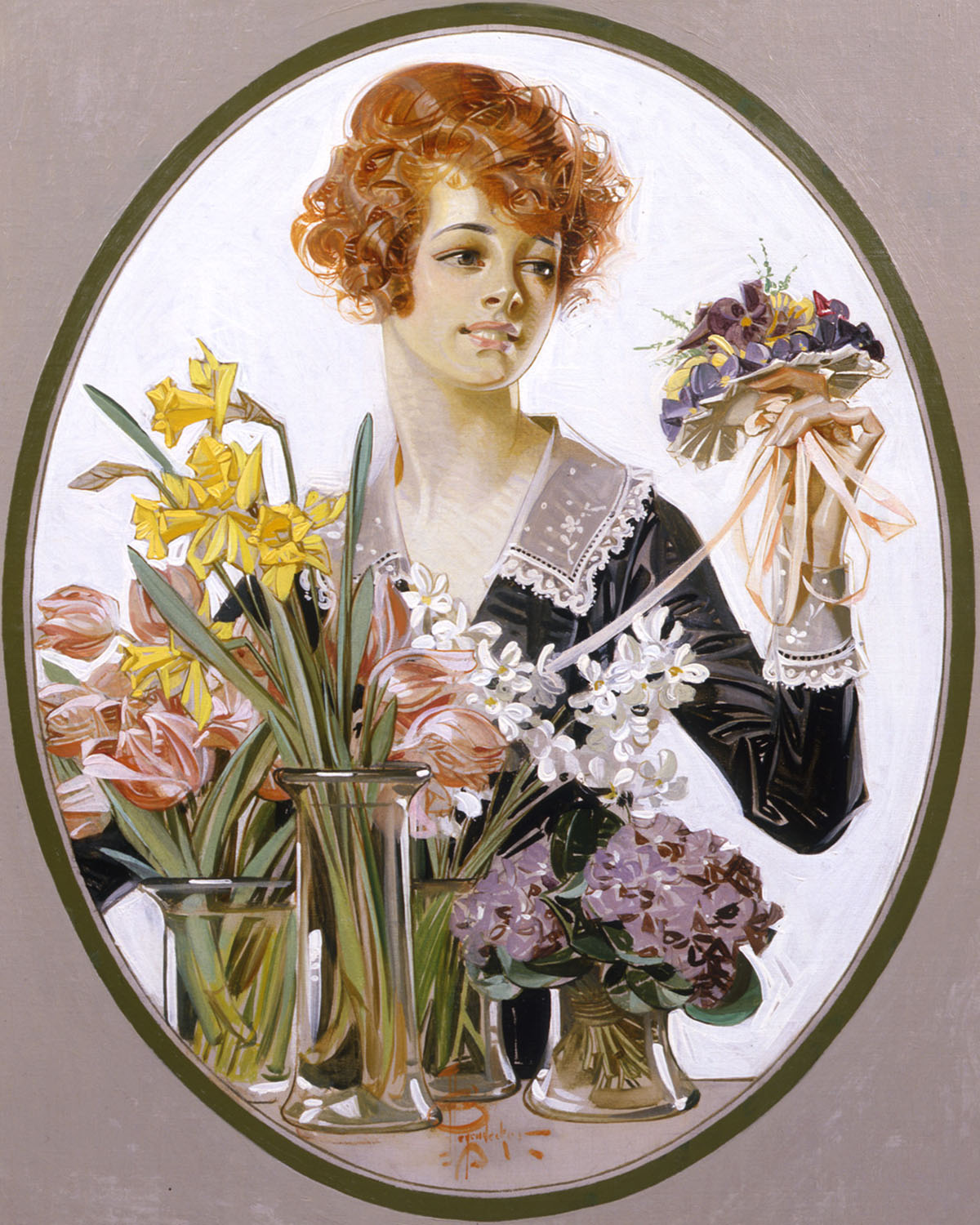
J.C. Leyendecker (1874-1951)
Easter, 1919
1919, oil on canvas
25 1/2" x 21 1/2", signed lower center
Saturday Evening Post, April 19, 1919 cover
In this refined Easter cover for The Saturday Evening Post, J. C. Leyendecker shifts away from his familiar cherubic figures and instead centers the composition on an elegant young woman arranging flowers. With her poised demeanor and graceful movement, she embodies a more mature vision of the holiday—one rooted in beauty, ritual, and the quiet pleasures of domestic life. The act of arranging blooms becomes both a decorative gesture and a symbolic one, aligning closely with the themes of renewal and rebirth associated with Easter and the spring season.
Leyendecker’s signature precision and sophisticated palette elevate the scene, transforming a simple moment into an idealized expression of modern American life. The flowers themselves—fresh, vibrant, and carefully composed—serve as a visual metaphor for the season’s renewal, while the figure reflects the era’s aspirational elegance. In this work, Easter becomes less about overt symbolism and more about atmosphere: a celebration of refinement, femininity, and the enduring sense of optimism that accompanies the arrival of spring.
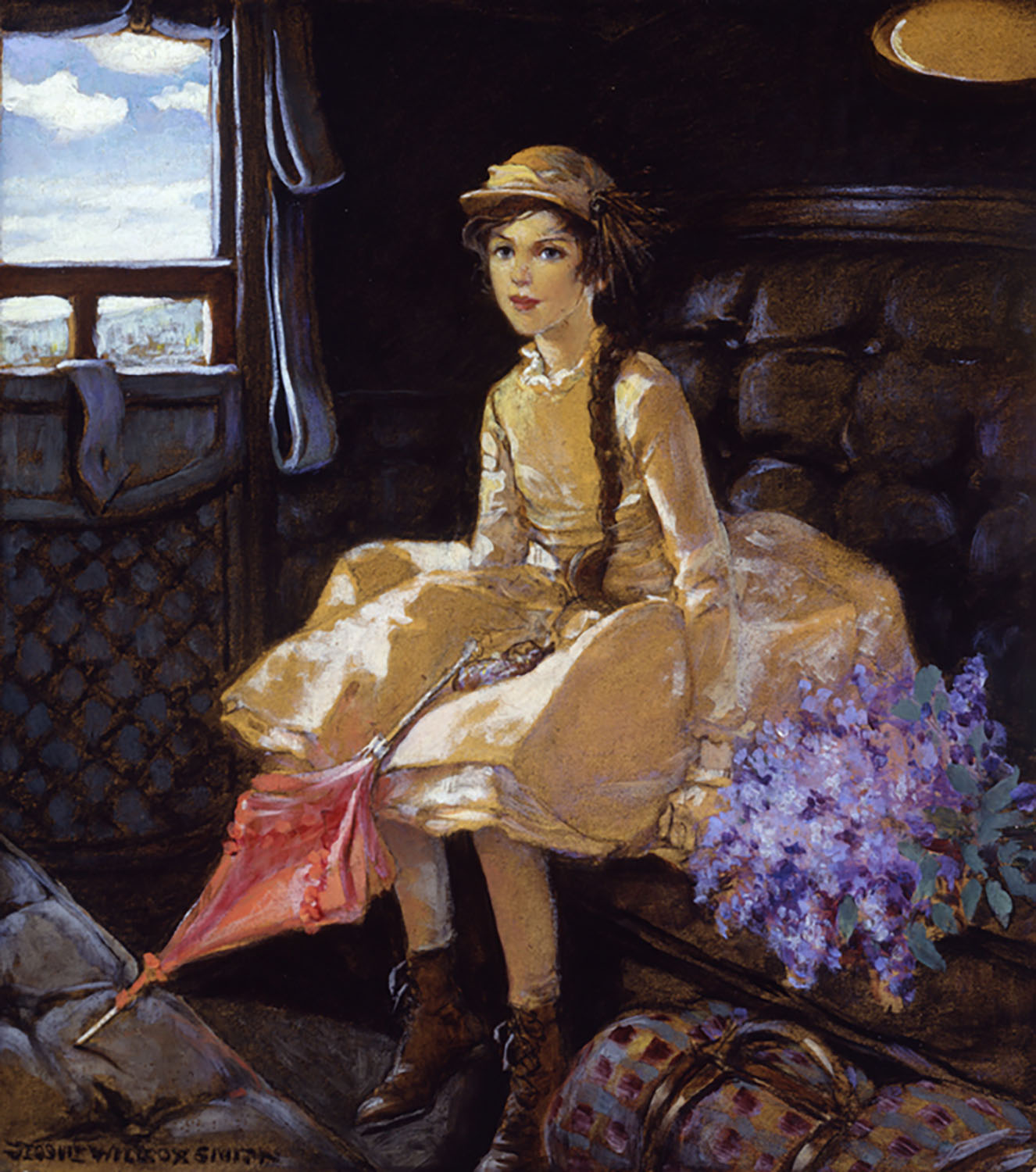
Jessie Willcox Smith (1863-1935)
Rebecca of Sunnybrook Farm
1923, oil and charcoal on board
18 3/4" x 16 3/4", signed lower left
Good Housekeeping, July 1923 cover
In this cover for Good Housekeeping, Jessie Willcox Smith brings to life Rebecca Rowena Randall, the spirited heroine of Kate Douglas Wiggin’s beloved 1903 novel. Known for her sensitive portrayals of children, Smith captures Rebecca at a moment poised between imagination and self-discovery, reflecting the character’s journey from a modest upbringing to her formative years in Riverboro, Maine. With warmth and quiet dignity, Smith conveys both the individuality and resilience that define Rebecca’s enduring appeal.
Set against the gentle rhythms of rural life, the image echoes the broader themes of growth and transformation central to both the story and the season of spring. Rebecca’s presence suggests a world in which optimism and character can shape one’s future, even in the face of hardship. Through her luminous palette and graceful composition, Smith transforms this literary figure into a symbol of renewal—where youth, hope, and possibility unfold together.
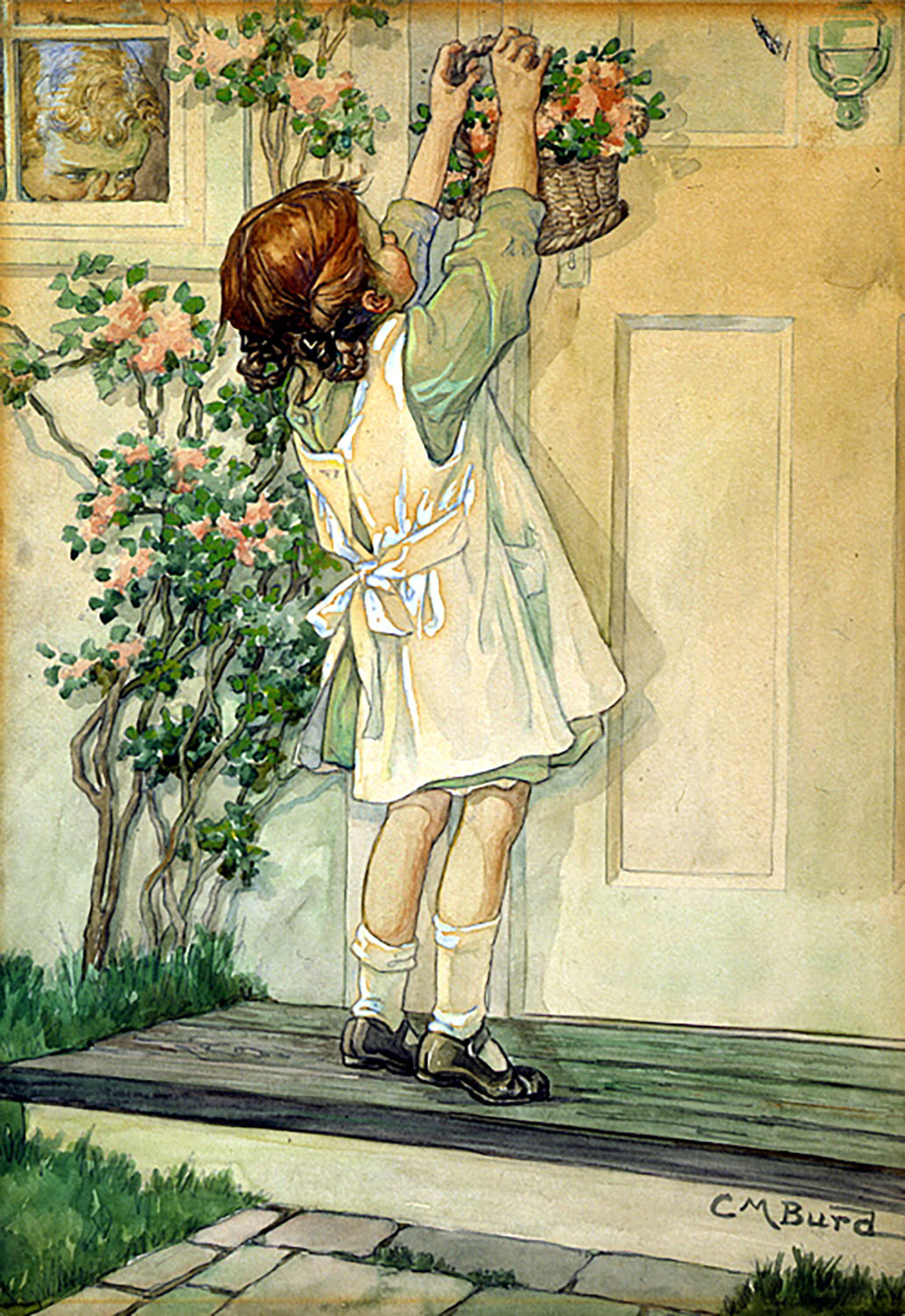
Clara M. Burd (1873-1933)
Girl Placing May Basket on Door
1925, watercolor on paper
15 1/2" x 11", signed lower right
"Kiddies Frolics" of the "Kiddie Wonder" series, by Josephine Lawrence, Cupples & Leon Co. 1926
In Girl Placing May Basket on Door, Clara M. Burd captures the quiet charm of a once-beloved springtime tradition. Associated with May Day, the act of leaving a small basket of flowers at a neighbor’s door—often anonymously—was a gesture of goodwill, celebration, and community. Burd renders the moment with delicacy and grace, as the young girl moves with care and intention, embodying the innocence and generosity of childhood.
Created for Kiddies Frolics in the “Kiddie Wonder” series, the illustration reflects Burd’s gift for depicting youthful figures in harmonious natural settings. The image speaks to the spirit of renewal that defines spring—not only in blooming flowers, but in human connection and kindness. Through this simple act, Burd reminds us that the season’s optimism is often expressed in small, thoughtful gestures that bring people closer together.
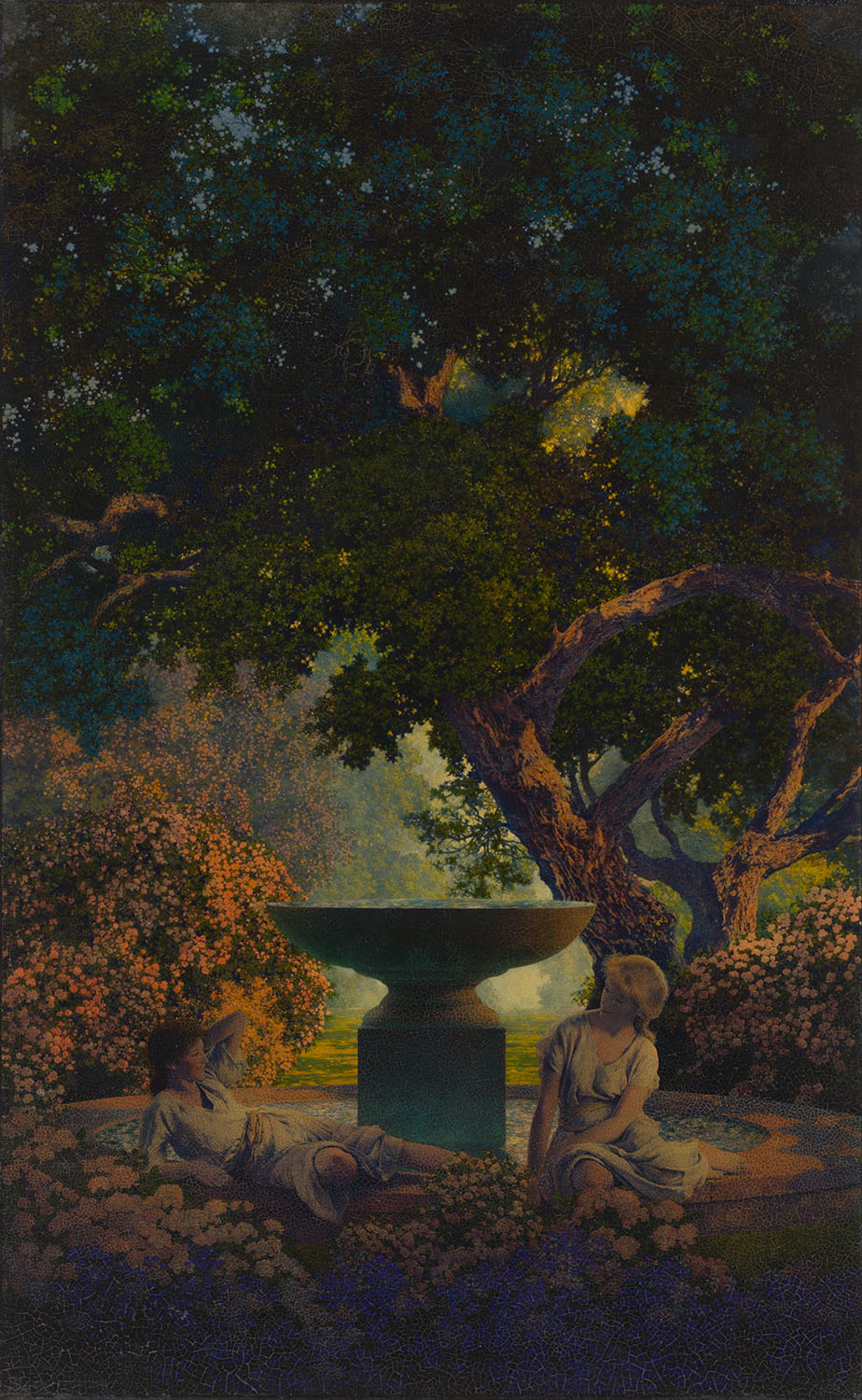
Maxfield Parrish (1870-1966)
Reveries
1926, oil on panel
35" x 22"
General Electric Edison Mazda calendar, 1927
In Reveries, Maxfield Parrish presents one of his signature idealized figures—serene, luminous, and suspended in a dreamlike world of radiant color and calm reflection. The reclining female figures, bathed in Parrish’s distinctive glowing light, embody both beauty and contemplation, inviting the viewer into a moment of stillness. As in much of his work, the figures are less an individual portrait than an archetype—an expression of harmony, escape, and the aspirational ideals that defined early twentieth-century American visual culture.
This painting was created for the General Electric Edison Mazda calendar series, among the most widely distributed and influential images in American homes at the time. Parrish’s collaboration with Edison Mazda helped elevate the calendar into a form of fine art reproduction, bringing his imagery to a vast national audience and solidifying his reputation as one of America’s most popular artists. Through these calendars, Parrish’s vision of beauty—especially his iconic, ethereal women—became deeply embedded in the American imagination, aligning perfectly with the themes of renewal, light, and optimism that define the spirit of spring.
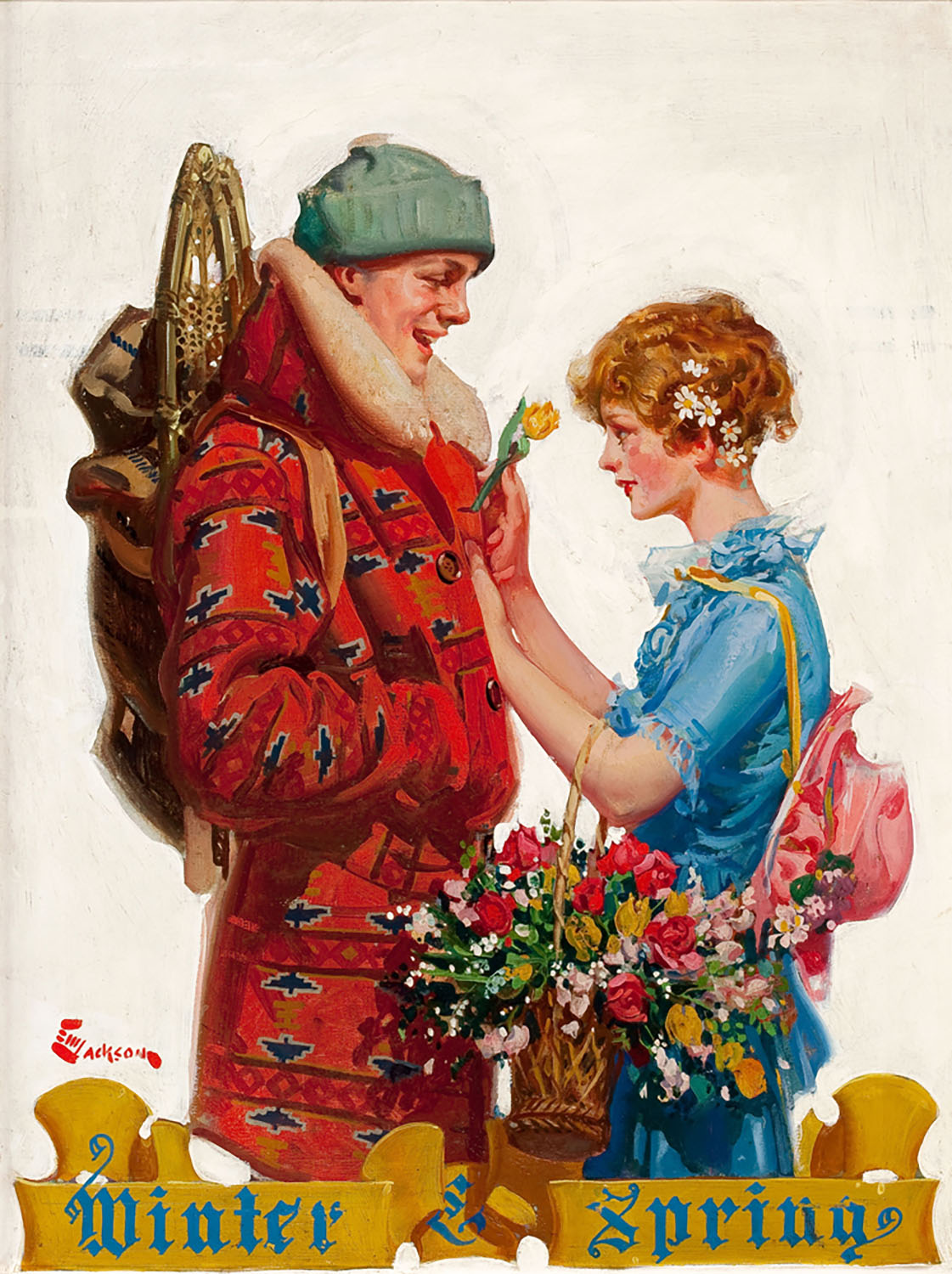
Elbert McGran Jackson (1896-1962)
Winter & Spring
1927, oil on canvas
25" x 19", signed lower left
Saturday Evening Post, March 10, 1928 cover
In Winter & Spring, Elbert McGran Jackson presents the changing of the seasons as a lively and symbolic encounter, capturing the moment when winter’s chill gives way to spring’s warmth. Created for the March 10, 1928 cover of The Saturday Evening Post, the composition plays on contrast—heavy versus light, stillness versus movement—suggesting a gentle but inevitable transition. Jackson’s figures and visual cues bring personality to the seasons themselves, transforming a natural shift into a narrative of departure and arrival.
The image resonates with the universal anticipation of early spring, when signs of renewal begin to emerge but winter has not yet fully receded. Jackson’s approachable, narrative style reflects the Post’s ability to connect with a broad audience, using humor and familiarity to mark this seasonal turning point. In doing so, Winter & Spring becomes more than a calendar moment—it captures the optimism of change, when the promise of new life begins to overtake the past.
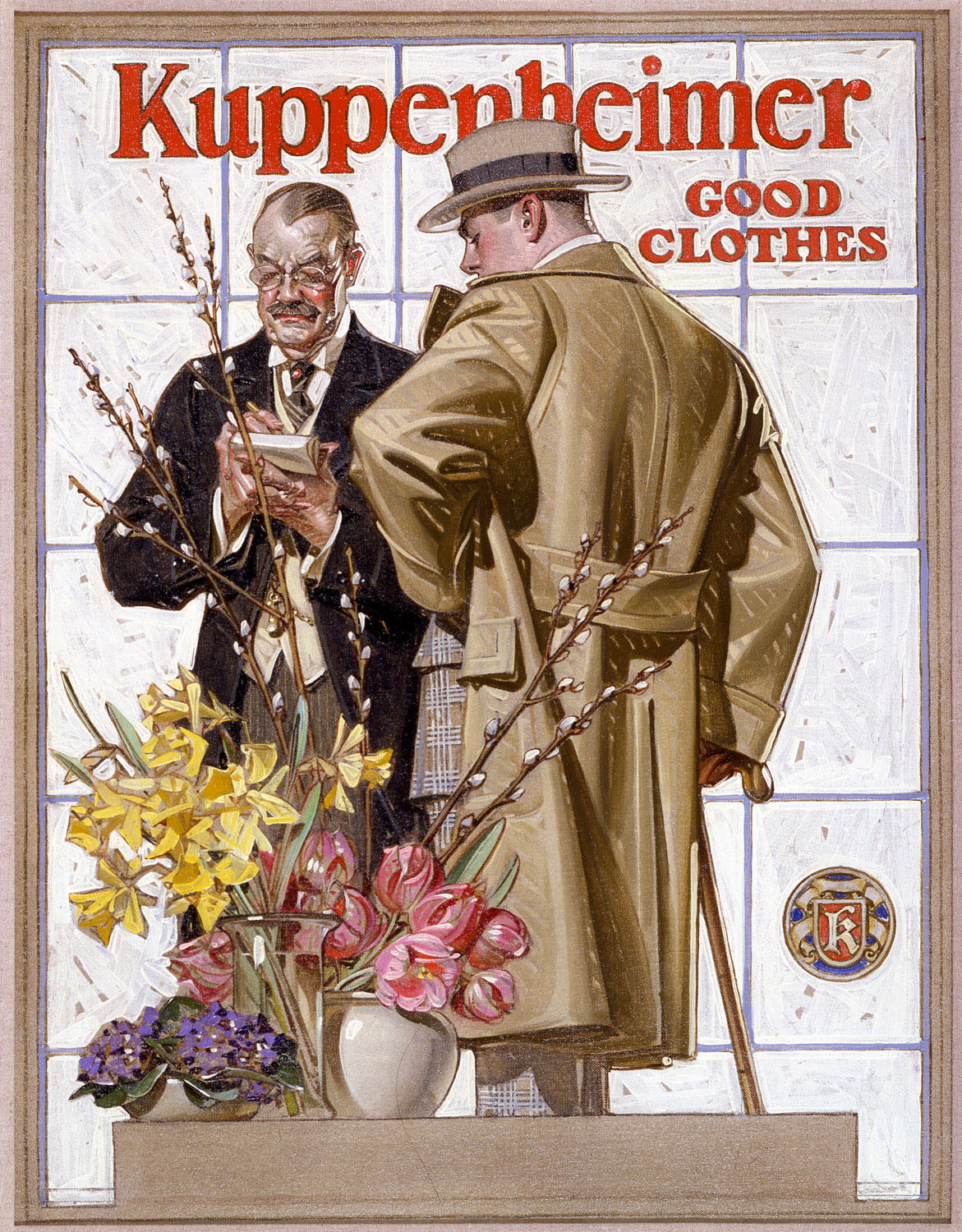
J.C. Leyendecker (1874-1951)
Spring Flowers
1928, oil on canvas
28" x 21"
House of Kuppenheimer advertisement
In Spring Flowers, J. C. Leyendecker transforms the language of the season into a sophisticated advertising statement for the House of Kuppenheimer. A sharply dressed gentleman, seen from behind, becomes the focal point of the composition, his impeccably tailored overcoat presented with quiet confidence. Leyendecker’s masterful handling of form and line emphasizes the garment’s perfect fit, allowing elegance itself to serve as the central message.
By incorporating floral elements, Leyendecker aligns fashion with the spirit of spring—freshness, renewal, and refined beauty. The blooms suggest a seasonal shift not only in nature, but in style and self-presentation, reinforcing the idea that modern life moves in harmony with the rhythms of the year. In this way, the image elevates advertising into art, using the optimism of spring to convey both aspiration and timeless sophistication.
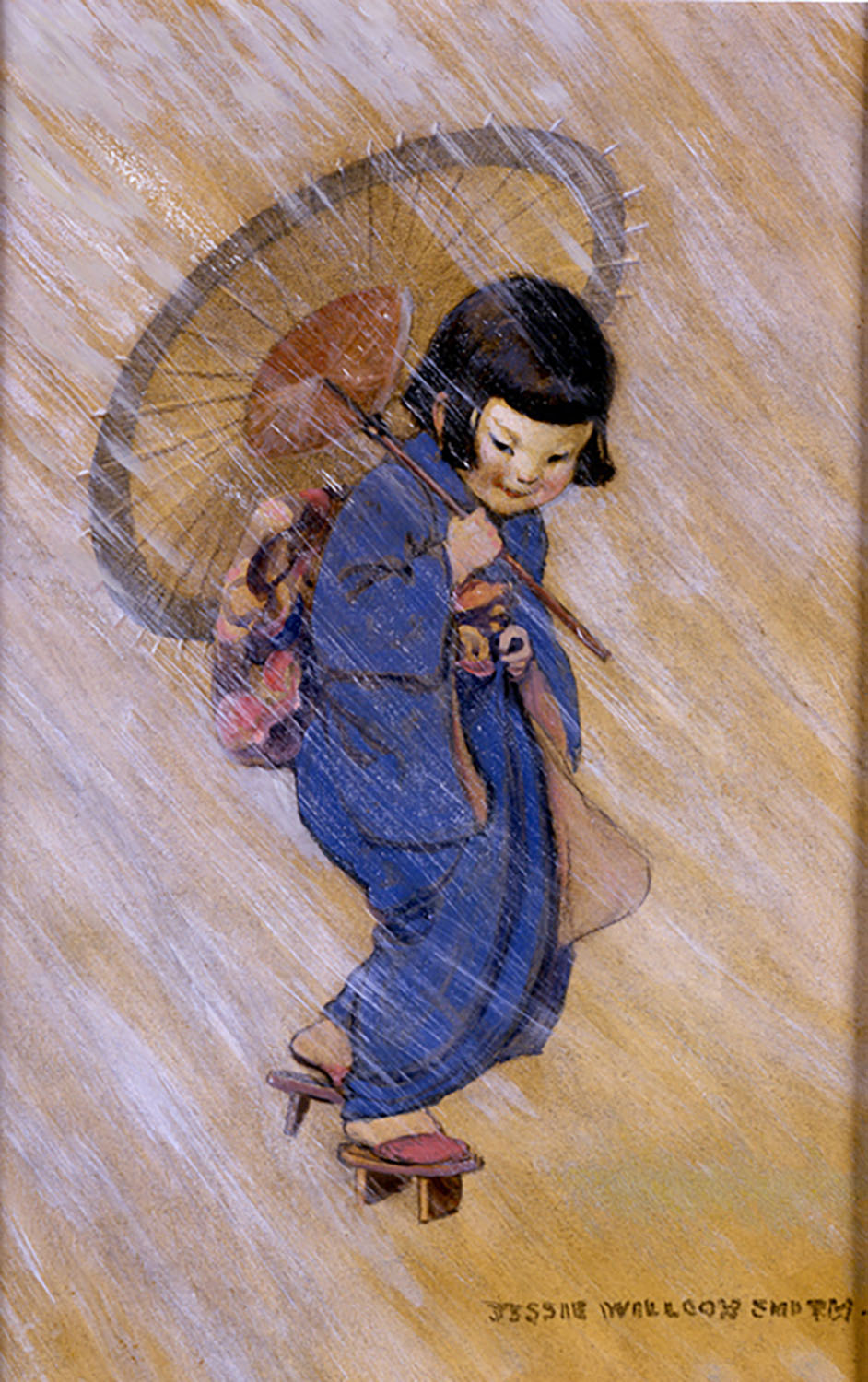
Jessie Willcox Smith (1863-1935)
April Shower
1930, watercolor, gouache and charcoal on board
19" x 12", signed lower right
Good Housekeeping, April 1930 cover
In April Showers, created for the April 1930 cover of Good Housekeeping, Jessie Willcox Smith transforms a rainy spring day into a scene of warmth and quiet delight. Known for her sensitive portrayals of children, Smith captures the figure with a gentle charm, turning what might be an inconvenience into an opportunity for play, curiosity, and wonder. The soft palette and delicate handling of form reflect her signature ability to find beauty in everyday moments.
The image embraces the familiar rhythm of the season—spring rains that nourish new growth and signal the transition from winter to renewal. Rather than resisting the rain, Smith’s subject engages with it, embodying a spirit of optimism and adaptability. In this way, April Showers becomes a celebration of resilience and joy, reminding us that even the grayest days of spring carry the promise of brighter ones to come.
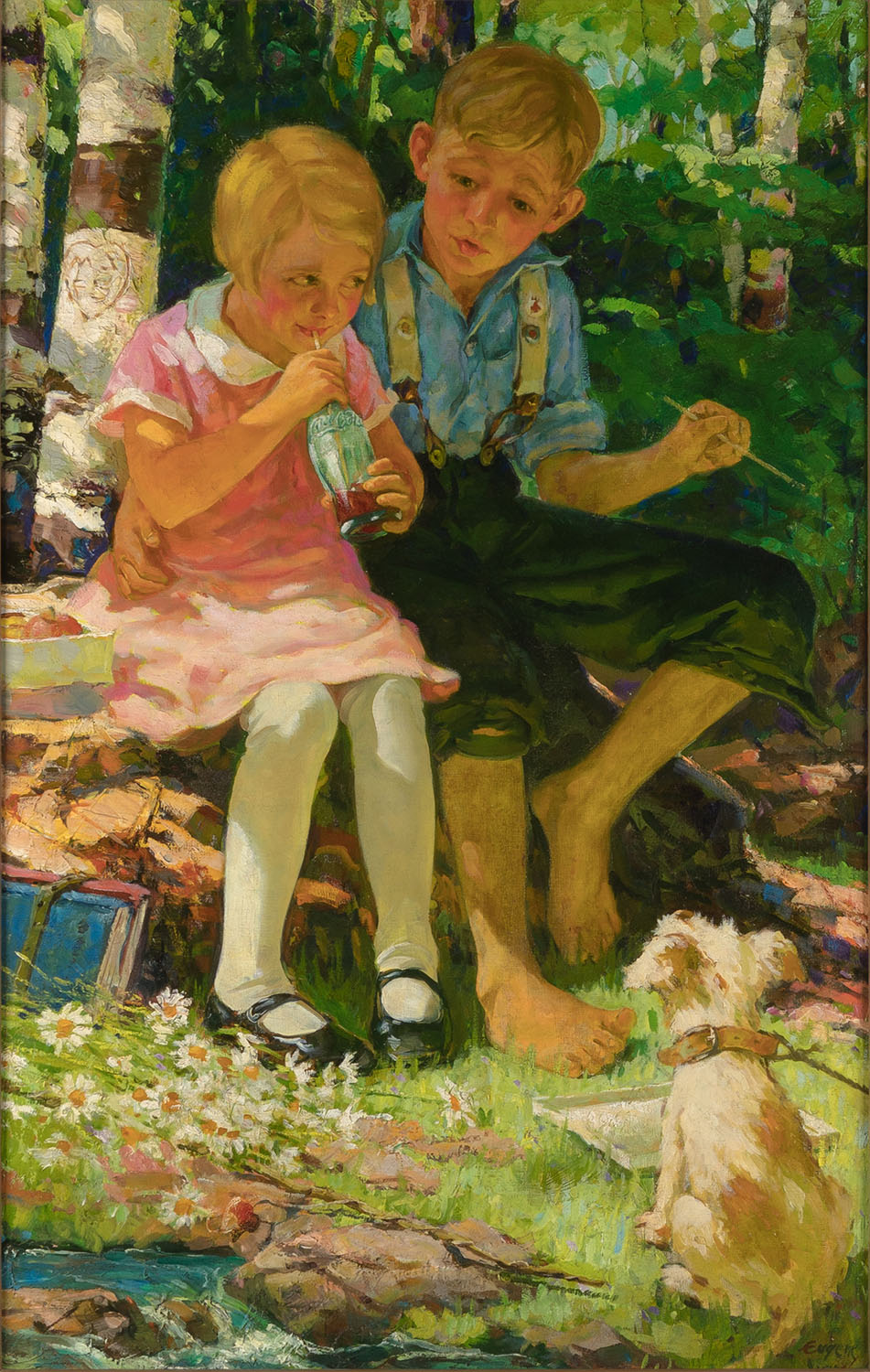
Eugene Iverd (1893-1938)
The Pause That Refreshes
1930, oil on canvas
36" x 23"
Proposed Coca-Cola advertisement
In The Pause That Refreshes, Eugene Iverd infuses a simple moment with warmth and gentle humor, capturing the irresistible appeal of a shared treat on a spring day. Created as a proposed advertisement for Coca-Cola, the scene centers on a young girl savoring her drink, while beside her, a barefoot boy looks on with eager anticipation—clearly hoping for a sip before it disappears. Even the small dog at their feet seems drawn into the moment, its attention fixed with equal longing, adding a playful note of camaraderie and desire.
Iverd’s composition brings the idea of “refreshment” to life not just as a product, but as a shared experience—one rooted in childhood, companionship, and the small pleasures of the season. Set outdoors amid fresh greenery, the image aligns perfectly with the spirit of spring, where simple joys feel heightened and fleeting. Through its humor and relatability, the painting reflects both the optimism of the era and the universal delight of a moment everyone wishes could last just a little longer.
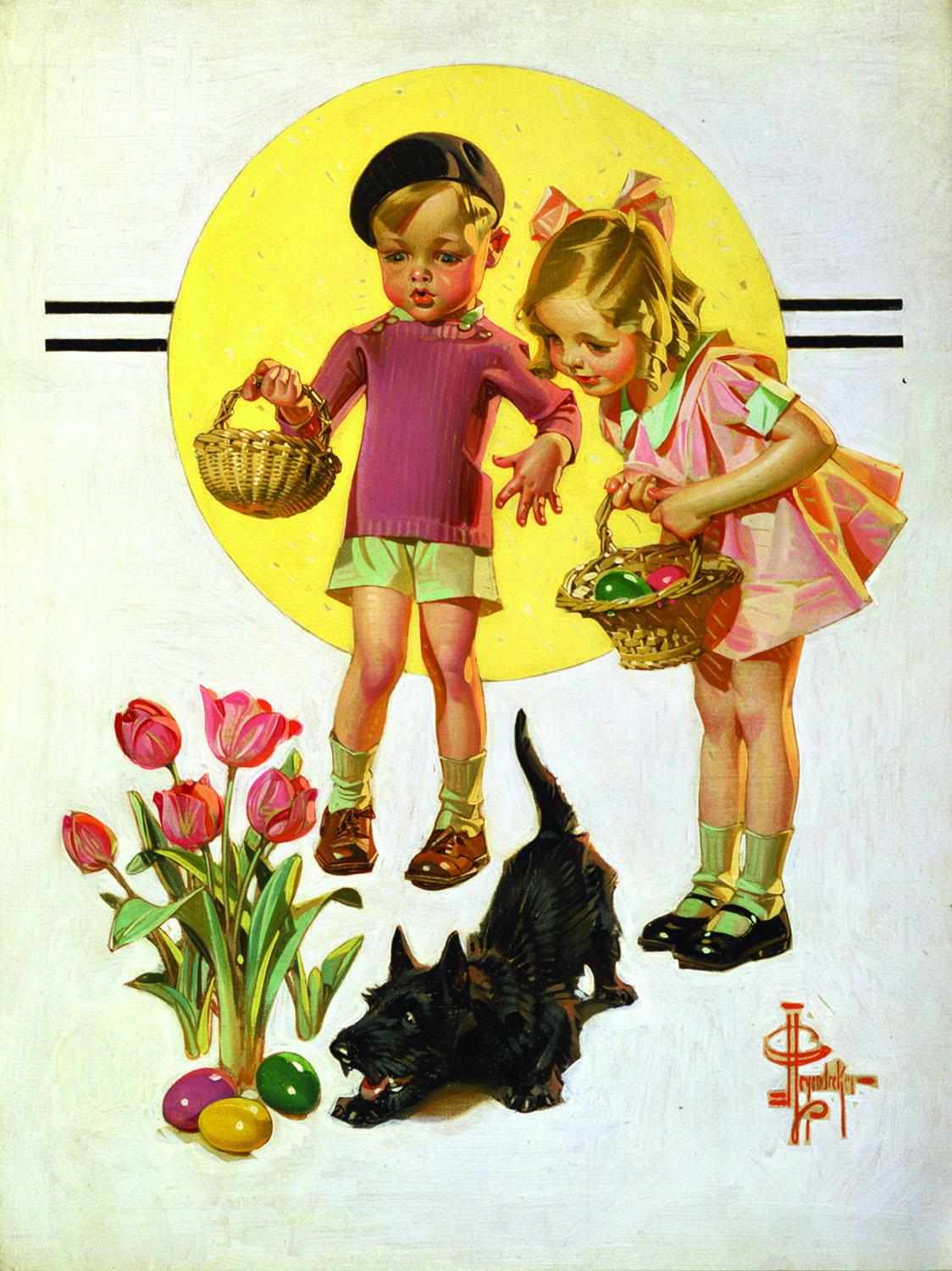
J.C. Leyendecker (1874-1951)
Easter Egg Hunt
1933, oil on canvas
32" x 24", signed lower right
Saturday Evening Post, April 15, 1933 cover
In Easter Egg Hunt, created for the April 15, 1933 cover of The Saturday Evening Post, J. C. Leyendecker captures the joyful energy and playful anticipation of one of spring’s most beloved traditions. Children move with purpose and excitement, searching for brightly colored eggs hidden among fresh blooms, their activity echoing the liveliness of the season itself. Leyendecker’s crisp composition and vibrant palette bring a sense of motion and delight to the scene, emphasizing the spirit of discovery that defines both the holiday and childhood.
Beyond its charm, the image reflects the enduring appeal of shared rituals that mark the arrival of spring. The Easter egg hunt becomes a symbol of renewal and possibility—each hidden egg a small promise waiting to be found. In the midst of the early 1930s, such scenes of innocence and celebration offered a reassuring vision of continuity and joy, reinforcing Leyendecker’s ability to capture not only an event, but a feeling deeply embedded in American life.
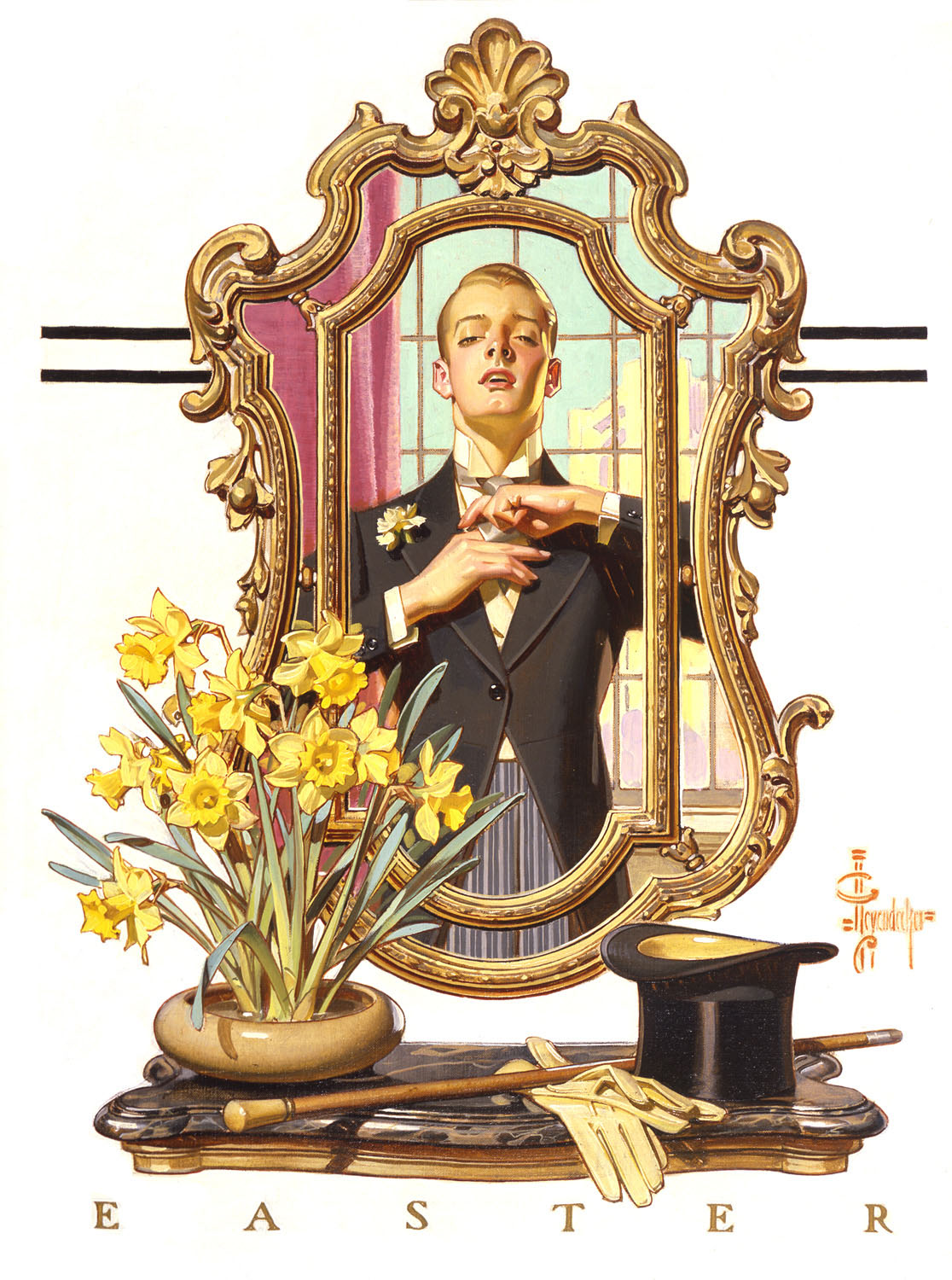
J.C. Leyendecker (1874-1951)
Easter (Man in Mirror)
1936, oil on canvas
30 1/2" x 20 3/4", signed lower right
Saturday Evening Post, April 11, 1936 cover
In Easter (Man in Mirror), created for the April 11, 1936 cover of The Saturday Evening Post, J. C. Leyendecker brings the sophistication of his celebrated menswear advertising into the realm of magazine illustration. The composition centers on a well-dressed man adjusting his appearance before a mirror, a moment of quiet self-assessment that reflects both personal refinement and the ritual of presenting oneself to the world. Long associated with defining the ideal of masculine elegance through his work for clothing brands, Leyendecker here adapts that visual language for a broader cultural stage.
Set within the context of Easter and spring, the image suggests renewal not only in nature, but in identity and self-presentation. The figure appears to be preparing for an Easter outing—perhaps even New York City’s famed Fifth Avenue Easter Parade, where style and spectacle were on full display. In this light, the act of dressing becomes part of a larger social ritual, marking the season with elegance and anticipation.
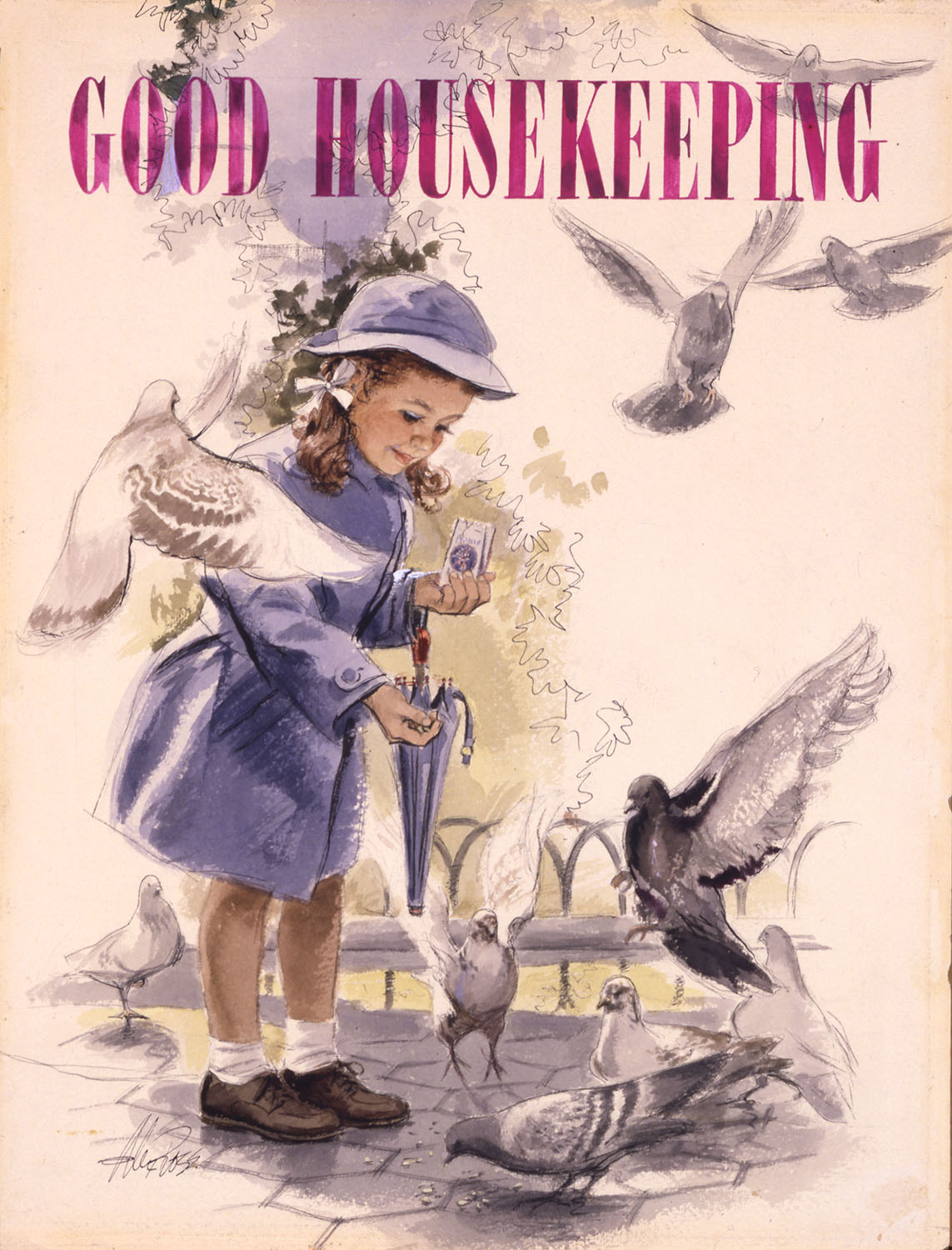
Alex Ross (1908-1990)
Little Girl in Blue Feeding Pigeons
1946, watercolor and pencil on board
17" x 13", signed lower left
Good Housekeeping, April 1946 cover
In Little Girl in Blue Feeding Pigeons, created for the April 1946 cover of Good Housekeeping, Alex Ross captures a quiet, tender moment of childhood set within the bustle of an urban environment. The young girl, dressed in a soft blue outfit, stands absorbed in her simple task, offering food to a gathering of pigeons. Ross’s gentle handling of light and color emphasizes her innocence and calm focus, allowing the surrounding activity to fall away as the viewer is drawn into her small, self-contained world.
Published just after the end of World War II, the image resonates with a renewed sense of peace and normalcy. The act of feeding pigeons—an everyday pleasure—becomes symbolic of a return to life’s quieter rhythms and the restoration of public spaces as places of joy and connection. In the context of spring, the scene reflects a broader cultural renewal, where hope, innocence, and the promise of the future are embodied in the presence of a child at ease in the world.
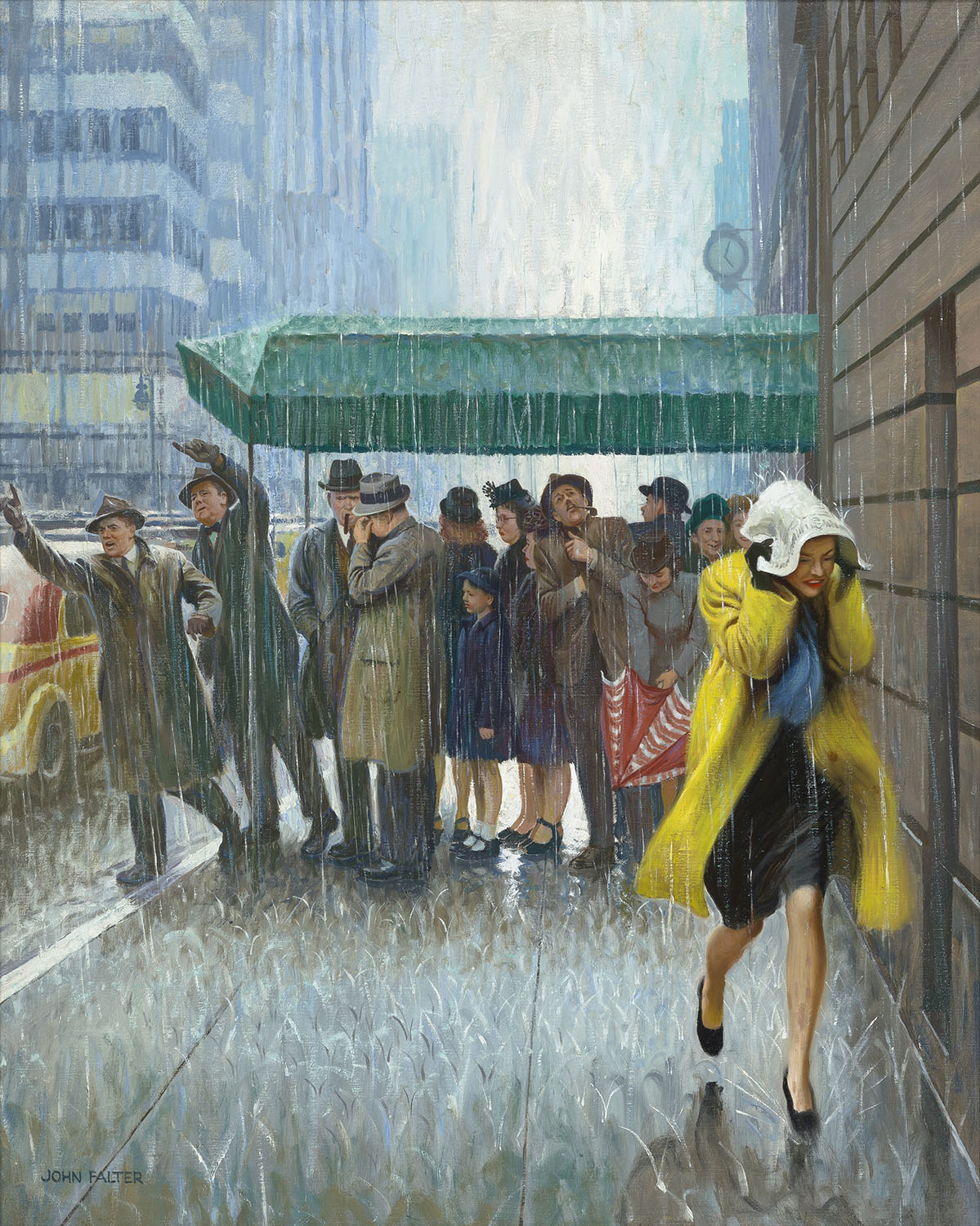
John Falter (1910-1982)
Rush Hour Shower
1947, oil on canvas
35 1/8" x 28 1/8", signed lower left
Saturday Evening Post, March 29, 1947 cover
In Rush Hour Shower, created for the March 29, 1947 cover of The Saturday Evening Post, John Falter captures a classic New York moment with humor and immediacy. A cluster of commuters huddle tightly beneath an awning, seeking refuge from a sudden spring downpour. Two gentlemen lean forward, arms raised in frustration as they attempt—unsuccessfully—to flag down passing cabs, their efforts swallowed by the chaos of rain and traffic.
Amid this scene of shared discomfort, Falter introduces a note of spirited independence: a lone woman dashes through the storm, clutching a newspaper over her head as her only protection. The contrast between those who wait and those who brave the elements adds a lively narrative tension, reflecting both the unpredictability of spring and the resilience of city life. With its glistening streets and animated figures, the painting celebrates the humor, energy, and determination that define everyday urban experience.
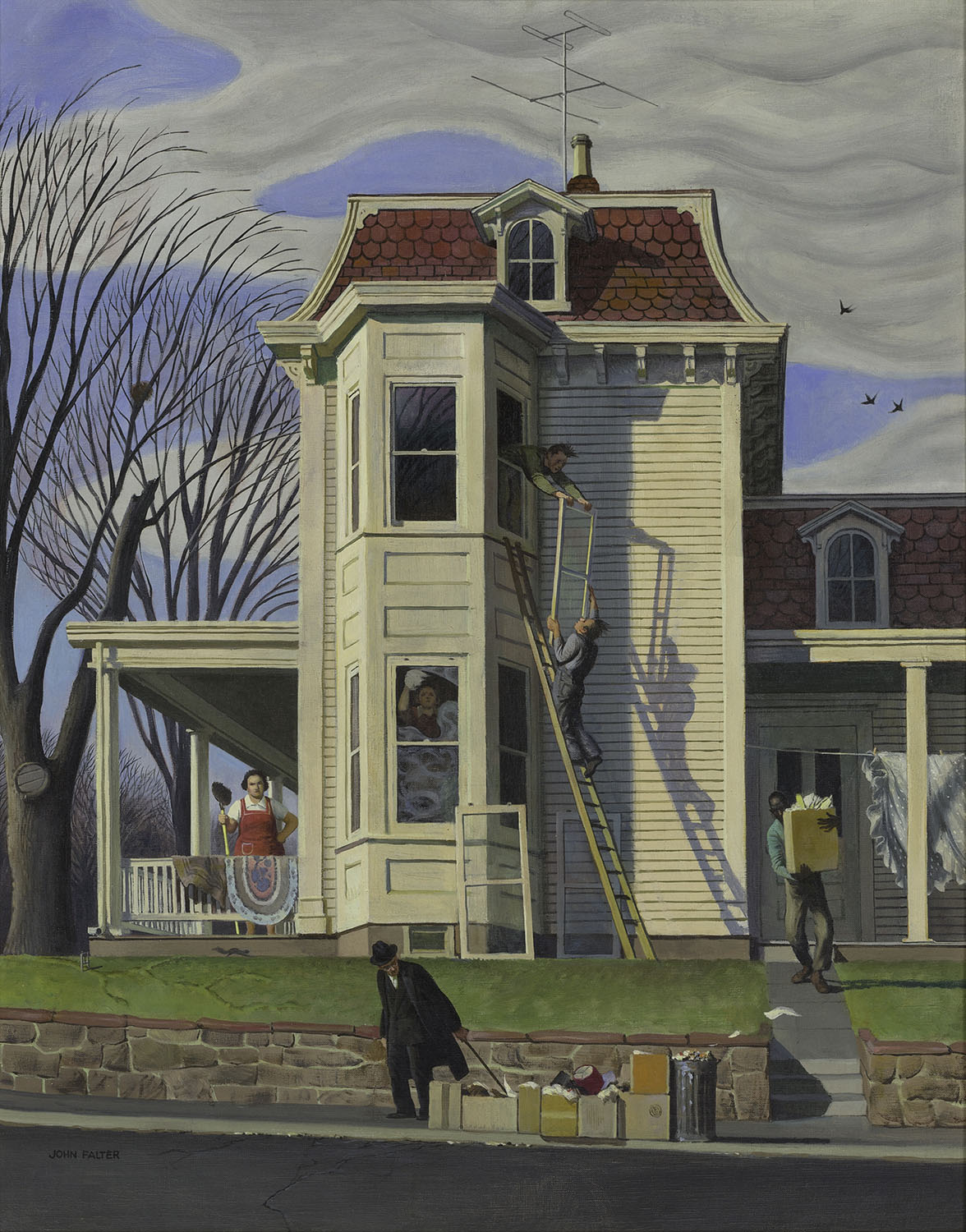
John Falter (1910-1982)
Spring Cleaning
1949, oil on canvas
28" x 22", signed lower left
Saturday Evening Post, March 26, 1949 cover
In Spring Cleaning, created for the March 26, 1949 cover of The Saturday Evening Post, John Falter turns a familiar seasonal ritual into a lively and relatable scene of domestic renewal. With his characteristic storytelling, Falter captures the bustle and energy of clearing out the old—windows thrown open, possessions shifted, and routines disrupted—all in the name of fresh beginnings. The composition reflects a moment of transition, where the home itself becomes part of spring’s larger transformation.
Falter’s work resonates with the postwar spirit of optimism, as Americans embraced both stability and progress in everyday life. Spring cleaning, long a cultural tradition, becomes more than a chore—it is a symbolic act of renewal, mirroring the season’s promise of starting anew. Through humor and keen observation, Falter elevates this ordinary activity into a celebration of movement, change, and the enduring desire to refresh both space and spirit.
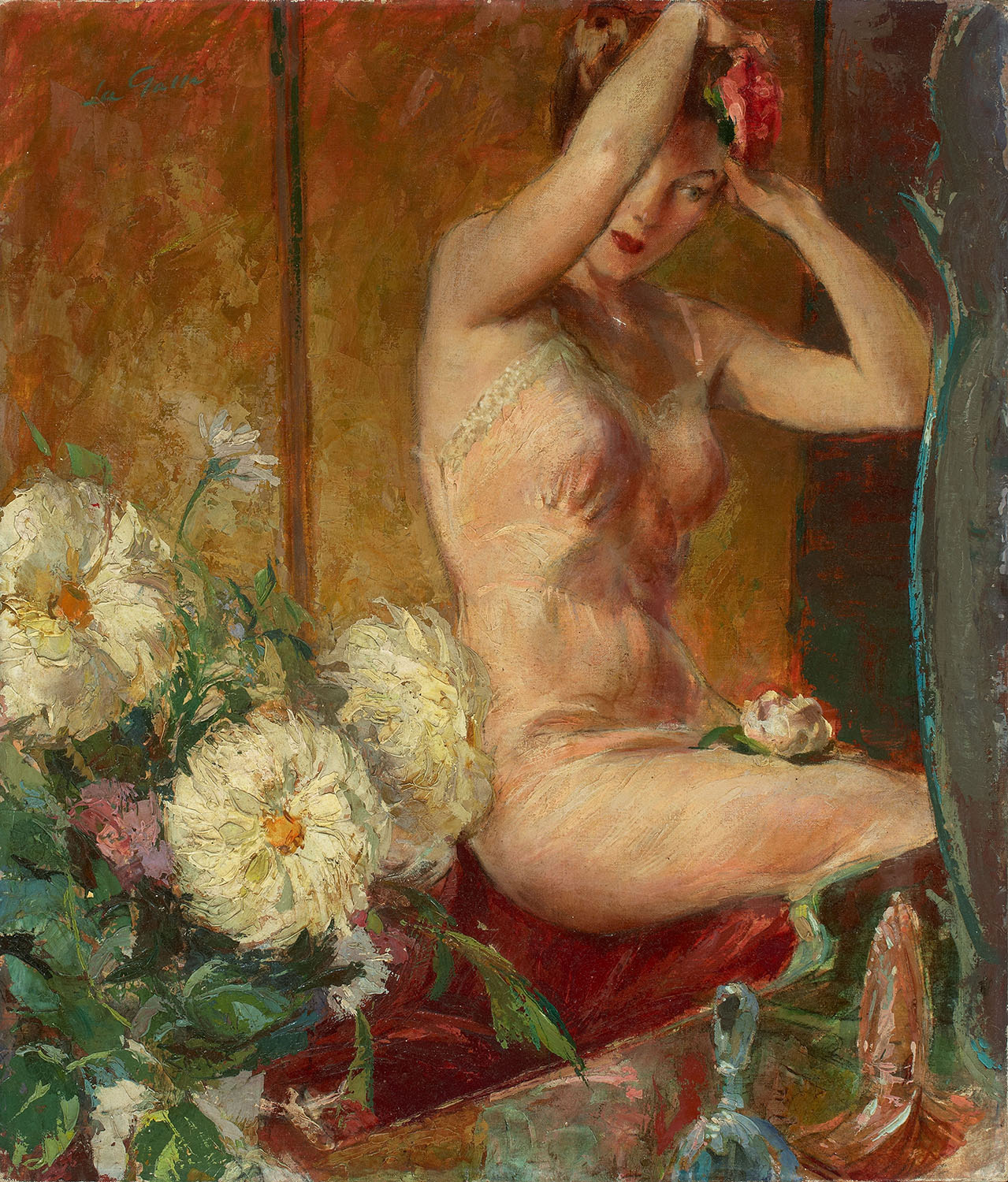
John Lagatta (1894-1977)
Woman Among Flowers
c. 1950, oil on canvas
24” x 21”, signed upper left
Laros Lingerie advertisement
In Woman Among Flowers, John LaGatta presents an image of effortless elegance, blending his refined figure painting with the soft allure of a floral setting. Created for a Laros Lingerie advertisement, the composition reflects LaGatta’s signature style—graceful, modern women rendered with a fluidity and sophistication that appealed to mid-century audiences. The figure appears both poised and relaxed, her presence harmonizing with the surrounding blooms in a scene that feels intimate yet idealized.
The pairing of feminine beauty and spring flowers reinforces themes of renewal, sensuality, and quiet confidence. As with much of LaGatta’s commercial work, the image transcends its advertising purpose, offering a vision of aspiration and refinement. In this context, spring becomes not only a season of natural growth, but a metaphor for personal renewal—where elegance and vitality are expressed through both form and atmosphere.
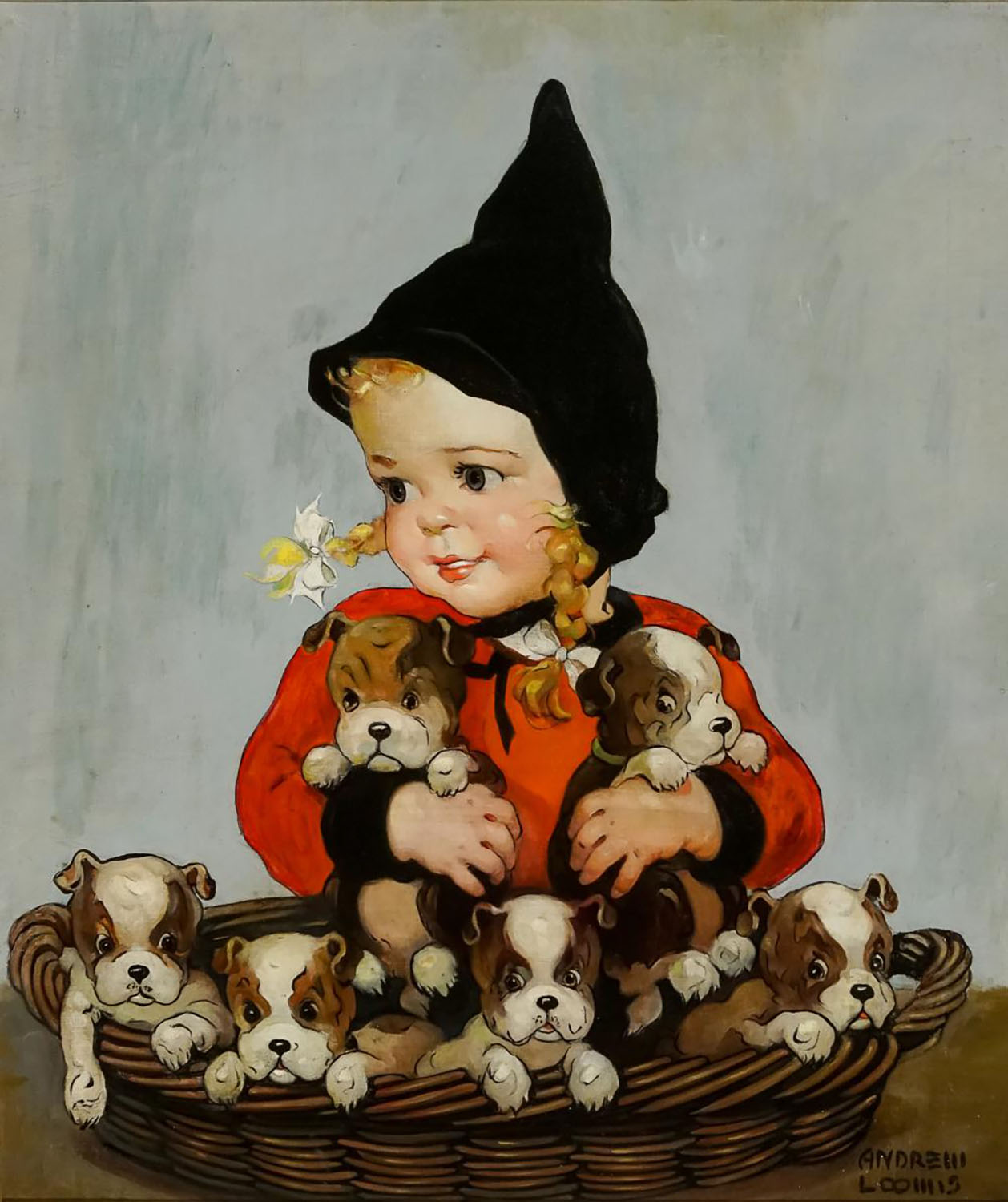
Andrew Loomis (1892-1959)
Young Girl with Basket of Puppies
c. 1950, oil on canvas
26" x 22 1/2", signed lower right
In Young Girl with Basket of Puppies, Andrew Loomis captures a moment of pure delight, pairing youthful innocence with the irresistible charm of new life. Known for his mastery of figure painting and his influential teaching methods, Loomis brings warmth and immediacy to the scene, as the young girl carefully cradles a basket overflowing with playful puppies. The composition radiates a sense of abundance, where each small movement and expression contributes to an atmosphere of joy and affection.
Set within the spirit of spring, the puppies serve as a natural symbol of renewal, growth, and vitality. Their energy and curiosity mirror the season itself, while the girl’s gentle care reflects themes of nurturing and connection. Through its simplicity and emotional resonance, the image celebrates the optimism of new beginnings—where life, in its earliest stages, is met with wonder, tenderness, and possibility.
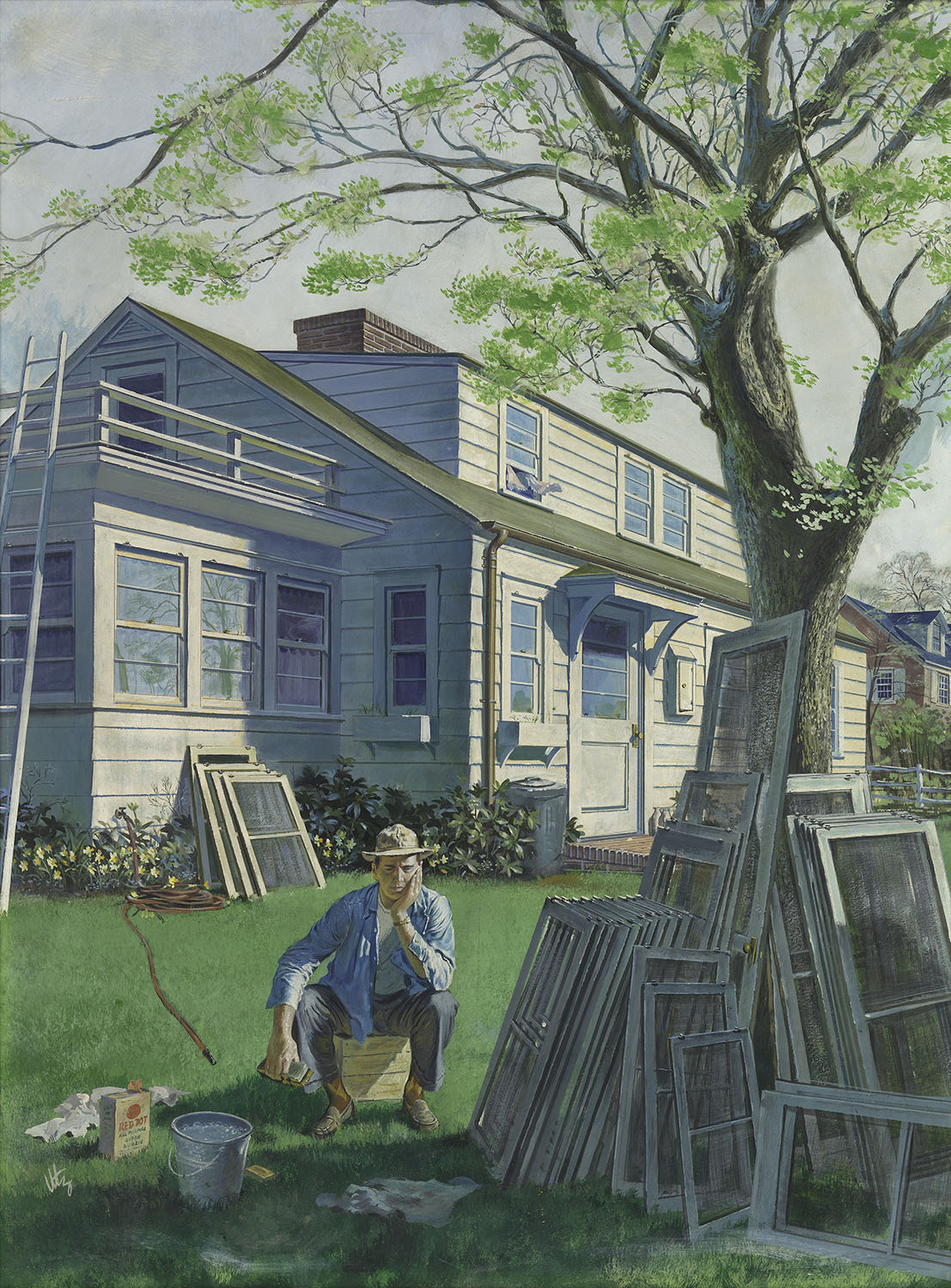
Thornton Utz (1914-1999)
Spring Cleaning
1954, tempera on board
29 1/4" x 21 7/8", signed lower left
Saturday Evening Post, April 10, 1954 cover
In Spring Cleaning, created for the April 10, 1954 cover of The Saturday Evening Post, Thornton Utz brings a lighthearted and energetic perspective to one of spring’s most familiar rituals. With a keen eye for storytelling, Utz captures the activity and mild chaos that accompany the annual effort to refresh the home—windows open, dust stirred, and routines temporarily upended in the pursuit of order. His lively composition and expressive figures turn an everyday task into a scene filled with movement and personality.
Reflecting the optimism of mid-century America, the image suggests that even work can be infused with humor and purpose. Spring cleaning becomes more than a chore; it is a symbolic clearing away of the past to make room for what lies ahead. In Utz’s hands, the act is both practical and celebratory, embodying the spirit of renewal that defines the season.
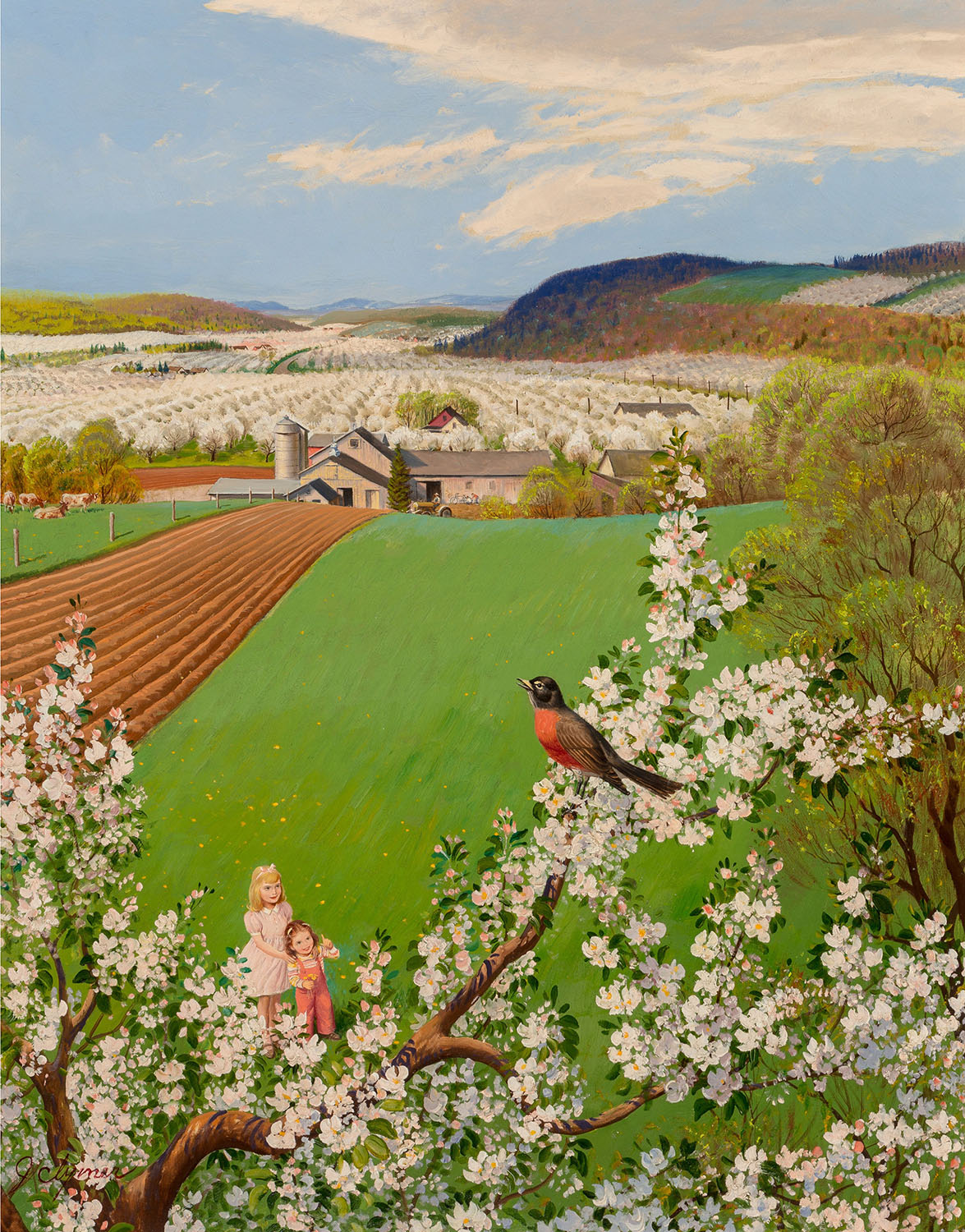
John Clymer (1907-1989)
Farm Children Seeing the First Robin of Spring
1955, oil on board
29 3/4” x 23”, signed lower left
Saturday Evening Post, May 7, 1955 cover
In Farm Children Seeing the First Robin of Spring, created for the May 7, 1955 cover of The Saturday Evening Post, John Clymer captures a moment of quiet wonder rooted in rural American life. The children pause in their daily routines, their attention drawn to the sight of the season’s first robin—an event long regarded as a harbinger of spring. Clymer’s naturalistic style and careful attention to setting ground the scene in authenticity, while the children’s expressions convey a shared sense of anticipation and discovery.
The image reflects a deep cultural connection to the land and its cycles, where small signs in nature carry meaningful significance. The arrival of the robin becomes a symbol of renewal and hope, marking the transition from winter’s stillness to the promise of warmer days ahead. Through its simplicity and sincerity, the painting evokes a timeless experience—one in which the changing of the seasons is felt not just in the landscape, but in the hearts of those who witness it.
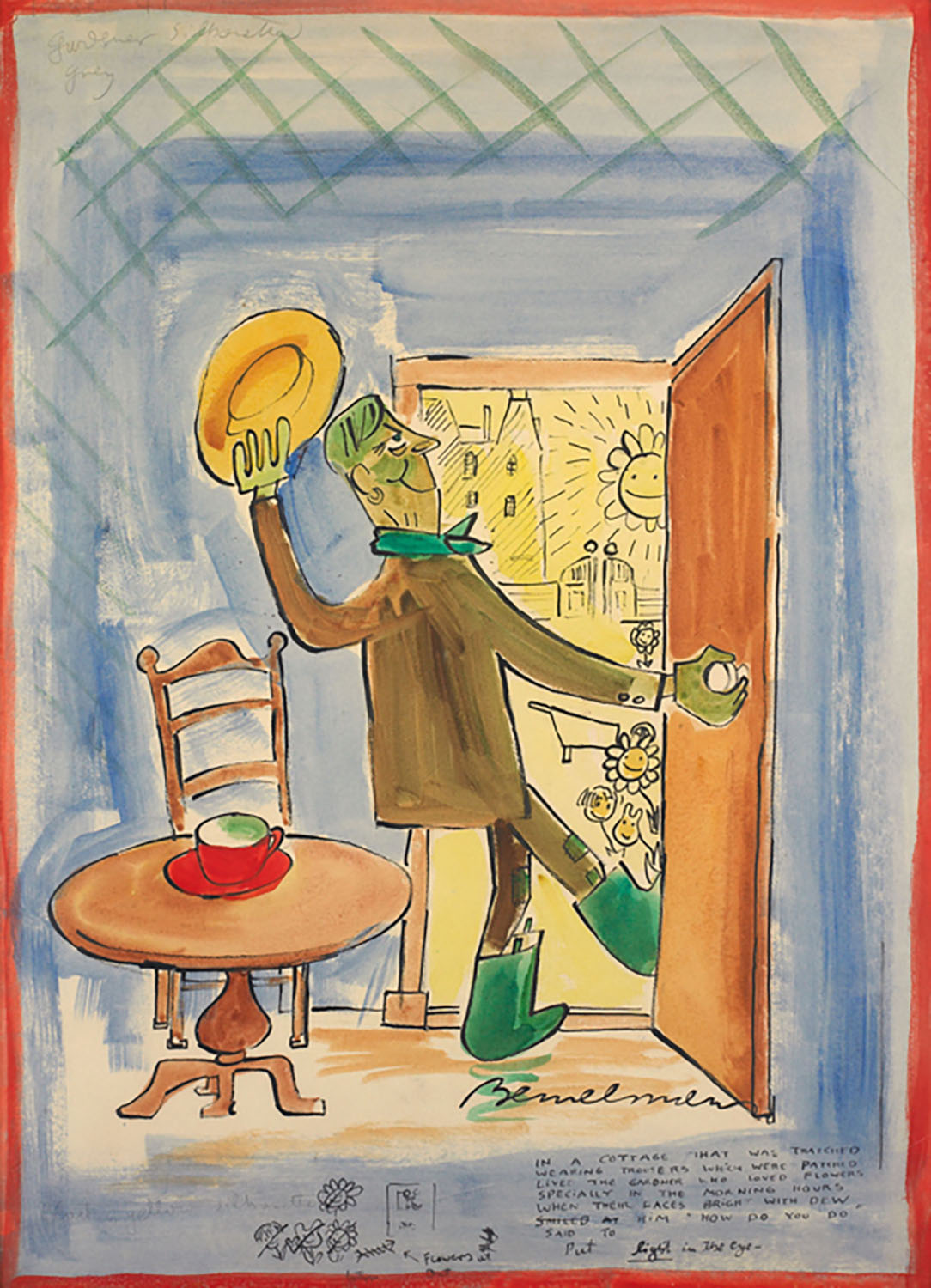
Ludwig Bemelmans (1898-1962)
The Gardener Who Loved Flowers
1961, gouache and watercolor on board
21 1/2" x 29 1/2", signed lower right
Madeline in London, by Ludwig Bemelmans, The Viking Press, 1961, pg. 41
In The Gardener Who Loved Flowers, created for Madeline in London, Ludwig Bemelmans brings his signature wit and charm to a celebration of nature and care. With his lively line and playful use of color, Bemelmans depicts the gardener not merely as a laborer, but as a figure of devotion—someone whose affection for flowers transforms routine work into an act of joy. The scene carries the whimsical spirit that defines the Madeline series, where everyday moments are infused with imagination and delight.